Watch, Read: Transforming the Cyber Workforce
December 22, 2025
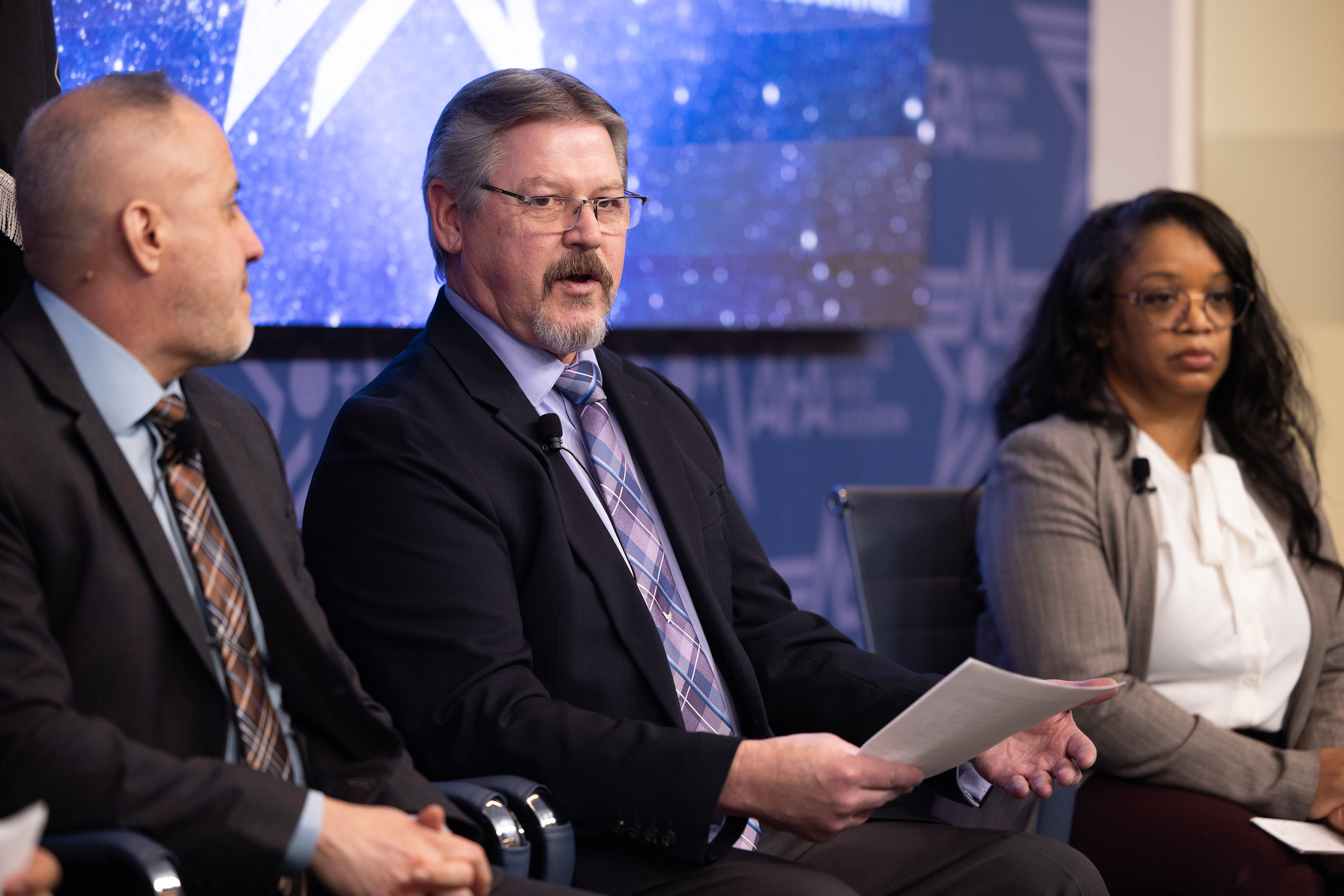
The Department of War is undertaking one of its most ambitious transformations yet: modernizing how it understands, qualifies, and measures its cyber workforces across all military services. AFA sat down for a Warfighters in Action discussion with four leaders who are at the center of the effort:
- Matthew Isnor, Cyber Workforce Development Director
- Alfredo Rodriguez, Workforce Innovation Directorate Deputy Director
- Timothy Beard, Department of the Air Force Associate Civilian Cyberspace and Information Technology Career Field Manager
- Desiree Lorell, Director of Cyber Workforce, U.S. Space Force, and Senior Cyber Civilian Development Advisor
Transcript
This transcript was generated with the assistance of AI. Please report inconsistencies to comms@afa.org.
Lt. Gen. Burt Field, USAF (Ret.):
Welcome to Air & Space Warfighters in Action. I’m Burt Field, President and CEO of the Air & Space Forces Association. At AFA, we have always recognized that building a strong, agile workforce is critical to our national security. It was part of our mission portfolio from the very beginning. And it’s why, 18 years ago, we launched the CyberPatriot program to inspire young people about cyber and other critical technologies and put them on a path to science, technology, engineering, and math careers. Programs like CyberPatriot and our space-focused StellarXplorers program inspire early interest and help create a talent pipeline that supports our long-term national security. Today, I’m joined by four leaders who are shaping the cyber workforce readiness across the Department of War. Matthew Isnor is the Cyber Workforce Development Director in the office of the DOW Chief Information Officer. His portfolio includes the full scope of the cyber workforce from data and software engineering to the future of artificial intelligence. Alfredo Rodriguez is the Workforce Innovation Deputy Director and Program Lead for the Cyber Workforce Data and Analytics in the office of the DOW Chief Information Officer. He oversees the data strategy behind this effort, bringing together workforce information from across the military services. Tim Beard is the Department of the Air Force Associate Civilian Cyber Force and Information Technology Career Field Manager, where he oversees force development, force renewal, force management, and overall talent management for more than 12,300 civilian positions in the Department of the Air Force. And Desiree Lorell is the Director of Cyber Workforce, US Space Force S6, and the Senior Cyber Civilian Development Advisor. She works at the intersection of cyber data and emerging technologies, helping shape how the department develops, modernizes, and sustains its cyber talent for the future. Together, our panelists today will give us a unique opportunity to delve into the range of issues challenging cyber workforce readiness. But before we jump into the questions, I want to give special thanks to our industry sponsors listed on the screen. They not only make this event possible, they also directly support our nation’s Airmen and Guardians. On behalf of AFA, thank you. So let’s get to it with this group of great individuals that have really, really long duty titles. So to start off with and maybe help some context, Matt, I was wondering, for old people like me, if you could help by saying, what is the cyber workforce? Is it the guy that comes and fixes my computer? Or is it the gal that’s defending us from cyber attacks?
Matthew Isnor:
It’s a very good question, Burt. And first, thank you very much for having us. And thank you for AFA for being a wonderful partner, not only to the department, but for all of the individuals out there. Thank you for having us on this esteemed panel.
Lt. Gen. Burt Field, USAF (Ret.):
You bet.
Matthew Isnor:
It’s a very good question. We’ve had to change a little bit of our way forward about attracting talent. Cyber is much broader than just with a traditional cybersecurity. It encompasses so many other areas, like IT, data, AI, software engineering, future areas like spectrum, or even the emerging quantum areas. It’s such a broad topic that we need to be able to try to attract the right talent, talk to the individuals, because they’re all coming from the same backgrounds. They all have similar skill sets, and they’re all doing different areas. So we need to be able to collaborate and not silo ourselves in the department and start working together to move it forward. How do you decide, then, what’s a military job and what’s a civilian job? Or do they overlap, or does it matter? Or is there some criteria you use? Yeah, so it’s definitely in the past. A lot of the technical areas have been traditionally our military professionals. We’re trying to change that scope. We’re trying to look at the areas where we can start getting our civilians, our military, and our contractors all with the same requisite knowledge base, the skill base, that they can all come in. Because every one of them lends a different scope. Military transitions a lot more. Civilians and contractors can add continuity to the mission. So we want to make sure that we bring that talent base up the same way.

Lt. Gen. Burt Field, USAF (Ret.):
OK, so now that we know that it spans a lot farther than just cybersecurity, it goes into IT, data, software engineering, and AI, and all of that stuff. All of it. It’s a lot. So how is the department, and then how is that going down to the military services, how are they adapting their approach to manage that diverse talent that you just described? How do you– that’s a lot.
Matthew Isnor:
That is a lot.
Lt. Gen. Burt Field, USAF (Ret.):
That’s a lot of people. That’s a broad range. And now you’ve got to manage all that.
Matthew Isnor:
No, I know. And I definitely want to make sure we get our esteemed colleagues from the services perspective. But I think it’s constant collaboration. I mean, this is not a– it’s a one team, one fight. The department from the OSD level, from all of the areas across the board need to be in constant communication with our stakeholders, with our people that are actually boots on the ground, helping us fill the positions and making sure they’re the right talent.
Timothy Beard:
Yeah, so I would just like to say that the DCWF being very flexible and growing and evolving, bringing in data and AI has actually enabled us to go out, and now we can start coding and identifying those positions. So we did a first run of that last spring. I expect we’ll probably do another. But we did see significant growth in the amount of positions and personnel that are actually now coded. And so now we know they’re doing that type of work. And as we approach to building those qualification sets on those case ads, we’ll have a very, very capable foundational level for that data and AI workforce. That’s part of our overall DCWF.
Desiree Lorell:
Yeah, I’d just like to add– so first of all, thank you. And thank you, sir, for being here. Thank you to AFA. Matt and Tim, you’re exactly right. It’s so much bigger than the siloed cyber and IT. Our Guardians are involved in everything. So cyber is in the data we touch, the decisions we make, every single decision. And Space Force is our nation’s first digital service. So digital fluency, cyber fluency, data fluency is embedded in every single thing that we do. And we rely specifically on DCWF because from the Space Force, we’re a lean organization. We have about a third, a third, a third between military personnel. And then we contract in for those critical skills and those project-based critical skills. And so we rely heavily on the DCWF to actually identify and pinpoint those particular skills and even potentially skill gaps in order to get after our mission.
Lt. Gen. Burt Field, USAF (Ret.):
So this sounds like such a broad scope of requirements in terms of people and capability. And I mean, we’re talking there’s a person involved, there’s AI involved, there’s machines involved, there’s software involved. So when you say, I’ve got to get all that ready, and I need to be able to demonstrate the readiness of the cyber workforce, what kind of metrics are you looking at to define that? And how do you get that down from the DOW, down to the services, down to the commanders, down to the career managers?
Alfredo Rodriguez:
So we’ve all touched around it a couple times, this DCWF, this common lexicon that defines the work, whether they’re in this uniform or the other uniform, or if they’re in the Space Force or the Air Force or the Department of the Army or the Navy, a lot of work has been done to get us on the same page on the work being performed across military services. Starting with that, we’re able to then set underline on top of that, what are the foundational knowledge and skills? Since we all agree what an IT person is or a cyber person is, and we can all be in that same construct. So now we can measure what the foundational skills are, how they’re attaining them, whether it’s through education or training or certification. And then we can build on that. If they have the foundational skills and knowledge on this framework that we all agree on, can they perform the mission, whether they’re at 17th Air Force or down in the Space Commands or one of the Army units? So that tiered layer is allowing us to see the different layers of readiness. So the commander can make a decision. Does he have the foundational skills and knowledge? And can he perform the mission at that specific environment? And because we use the DCWF and everything’s centered around these cyber codes, I can put those in different manpower and personnel systems and start aggregating data so we can start looking. We’re in the beginning of that. But it’s a very powerful tool, both at our level, to brief upwards, but for them as well, to get a picture of how they’re looking.
Lt. Gen. Burt Field, USAF (Ret.):
Well, let me ask you just to continue on the readiness theme. So I’ll just use an airplane analogy, because that’s my background. So when we talk about readiness at a squadron level, let’s say, we have a bunch of pilots. And they have to go out and fly a number of sorties and do a number of events. And we say, that pilot’s ready. And then we have airplane metrics, where we make sure that the airplane has all the systems that it’s needed for combat before we can call that airplane ready. And those are a couple of the functions of squadron readiness. Do you have similar things like that for your cyber workforce?
Matthew Isnor:
Yeah.
Lt. Gen. Burt Field, USAF (Ret.):
And the machines or the software or whatever?
Matthew Isnor:
Yeah, and this is kind of the culmination over time, that we’re implementing various programs, like our 8140 policy series, our DCWF for anyone, the DOW Cyber Workforce Framework. It cultivates exactly what Alfredo and everyone has said. It talks about the knowledge and skills. Our people are our number one asset. They’re the ones that can do all the things. In this technology world, things change so quickly. Tools, platforms, areas of infrastructure constantly are changing. Our people are the ones that we have to do the investment in. And if we understand their capabilities, then we can start tying to those overarching readiness capabilities, because they can be there to mitigate. They can be there to help. So it’s really taking care of our people. It’s really going after those types of skill set. I mean, in the three criteria of readiness, people account for two of them– people and training. So those are the ways that we need to get after it. There’s ways to benchmark and leverage all of these various things. Having some of the talent development going across, where we leverage the DCWF to understand what type of skill sets we need to come up, working with our education providers, working with our K through 12, leveraging programs like CyberPatriot, where we can actually look at those types of areas and scenarios and things and make sure that they grasp the skills, have their hands on keyboard, and go after it.
Alfredo Rodriguez:
I like your pilot analogy. It’s funny, we just had this conversation with our boss who was a UH-1 pilot. But if you’re a pilot, you have some basic knowledge of avionics, foundation skills. So that, for us, is our foundation knowledge. But then you’ve got to test on that frame. For him, it was an UH-1 or UH-60. That’s your residential portion. For us, together, do you have the avionics background? And you can test well on that frame. That picture is how we define readiness for the cyber workforce. And like Matt said, that’s just the person. You still need– is the airframe capable and so forth, and the technology’s up to date and so forth. But having that left side, we haven’t had that in a while in the cyber workforce. And so this is new. The 8140 policy gets us there. And it helps them kind of derive the skills they need.
Desiree Lorell:
One of the things that I wanted to just– and I know we’re going to actually double tap on this throughout the conversation. But we have a model, the Space Force Generation Model. And the skills that we build during prepare phase, we rely on those skills in ready and ultimately into commit. The ADVANA dashboard by Department of War allows visibility into those metrics. So that won’t–
Lt. Gen. Burt Field, USAF (Ret.):
What’s that dashboard again?
Desiree Lorell:
ADVANA. And that allows us to kind of see in so that our leaders in our field comms can make decisions. And so that actually also helps us with workforce health. And it impacts and influences through that Space Force Generation Model, SPOP4Gen.
Lt. Gen. Burt Field, USAF (Ret.):
Very interesting.
Matthew Isnor:
Yeah, I think Desiree brings up a really good point. Is in the past, we’ve done a lot of smaller internal scopes of readiness, where our operational individuals understand what their mission is and what their capability is, especially to the people. But from a broader department level, we have not had that. That’s what Alfredo’s team works on. That’s what all the services help provide. Give that visibility to understand the capability of what our people can do. Then if we have surge capabilities, we need to move or react to an adversary or something like that, that’s what we can do because we have that insight.
Lt. Gen. Burt Field, USAF (Ret.):
Yeah, and back in the dark ages when I was in the military, there actually was– this may surprise you– some bureaucracy hurdles between the services and within the services. But obviously, you have to overcome that in a way much more– literally, way more– with much more agility and much more effectiveness than we did in the past. So I’m sure you’ve worked that on a daily basis, as well as the issues of making sure the workforce is ready.
Matthew Isnor:
Why don’t you answer?
Alfredo Rodriguez:
I mean, in two aspects. One, from the Department of War’s perspective, we have to navigate not just these two. Your counterparts in the Army and the Corps and the Navy, who all will have a different perspective of where we’re going with the framework.
Lt. Gen. Burt Field, USAF (Ret.):
Yeah.
Alfredo Rodriguez:
The good news is the framework is adaptive and responsive. For our bosses listening, that’s our moniker. But it is to response to their mission needs. If we need to add a work role, if we need to tweak one, if we’re not in agreement with some of the knowledge and skills behind it, we make those adjustments. That allows us then to then navigate how we pull the data and if we’re seeing the same picture. But the teamwork across those military departments. At times, and Matt has to deal with them a lot, can be frictionless. But we’re all going towards the same direction. And it’s good to see from each and everybody’s fighting position where we need to adjust. And I think we just adjusted a few recently. The IT, we’re about to add one for the Space Force and a couple others.
Matthew Isnor:
And this is back to the wonderful buzz terms that Alfredo just mentioned. We’re always listening to have to have that open communication with our stakeholders. Because they’re the ones that are actually doing the fighting. They’re on the boots on the ground again. They’re talking and looking at what we have to be able to defend. So we have to always talk to them, get their feedback to make sure we update those standards and update that content.
Lt. Gen. Burt Field, USAF (Ret.):
And I would guess that the services have some authorities to make changes inside the service as well. Or do you have to wait until everybody gets on board?
Timothy Beard:
Yes, certainly we stay within the framework. But we have some leeway to– how do they say it? You can go stricter, but not less strict. So we have some leeway to do that. What we’ve chosen to do across the DAF is not to add anything. We think right now the framework is the best way to go forward. We don’t want to restrict anybody. So we leave it really to the unit levels to determine those work roles that they need for their mission sets and the work that’s performed. And other than from a foundational qualification standpoint, we abide by DOW’s guidance there. And then when we get to residential qualifications, it’s really up to the unit and that mission environment to determine it. Because every mission, every unit’s different.
Lt. Gen. Burt Field, USAF (Ret.):
Right.
Matthew Isnor:
No, I just want a copy of this. Because Tim said this is the best way forward.
Lt. Gen. Burt Field, USAF (Ret.):
That’s on record. OK. So we talked a little bit about the foundational skills that a person needs to have to enter the workforce. Are you getting enough to populate the workforce? Are you getting enough people with the skills? Or is there an opportunity to come in with less than the skills required and get that training after being assessed into the Air Force, Space Force, or the Army, Marines, or Navy? How do you look at that?
Matthew Isnor:
I mean, I can definitely answer. That’s why we have the constant ability to talk to our academic partners, talk to our training providers, our cert providers from industry, work with them across the board. Because when an individual comes in, because it’s a specialized department level mission, they’re never going to have all the qualifications. They’re never going to be fully trained. So there’s always a spin up to make sure that they understand the tools, the platforms. But if anything that we can ultimately work across the board that we can kind of front load, that we can start working with our other providers so they have that requisite knowledge base or skill base coming in, that helps us. We’re able to get people on mission much quicker once they have that skill set. That’s why leveraging programs, again, like CyberPatriot or our academic providers with all of our NCAEs, there’s a lot of those things out there that we are constantly trying to engage and constantly partnering with to make sure we hit it.
Alfredo Rodriguez:
And that partnership is key because they’re tying in with the 8140 policy. They’re tying into the framework and the knowledge and skills. So that’s shortening that gap. So when they do come in– there’s a Marine saying the standard is the standard. And so when they come in, they’re aligned to the DCWF. They will probably have been already working on that, whether through academic rigor or through skills and certification, getting the foundational skills to meet that particular work role. And now it’s just a matter of handing it over to them to get them ready for the mission support portion. So again, making sure they have the basics of avionics before we get them over to learn the framework.
Lt. Gen. Burt Field, USAF (Ret.):
Yeah. Well, it seems like integrating that data that you’re talking about, that’s got to be somebody’s full-time job almost, right?
Alfredo Rodriguez:
It is.
Lt. Gen. Burt Field, USAF (Ret.):
Because you’re doing it across all those services. Are you getting better at that? Are you developing?
Alfredo Rodriguez:
Every iteration, we get better. And if you’ve ever had to deal with data, that first time you see it, you’re like, is this really the answer? But it just– because it’s a learning side on both ends. So we integrate the data from across the services. Just on the HR side, that’s 10 different systems, because we separate manpower and personnel across each of the MILDEVs. And then we’re still working through how we’re collecting some of the qualification data. Some people have systems. Some people are doing that manually. I’m having to integrate all that up at the Department of War level so we can paint the department’s posture. And then we’ll trickle that down for them so they can look to see, what does that look like at the Air Force? And what does that look like in the Space Force? Or at 17th Air Force, and so forth. But every time we do it, they get better at reporting, and we get better at integrating. So that site picture is getting better for the senior leaders up and down.
Lt. Gen. Burt Field, USAF (Ret.):
Well, it seems like you guys would be pretty good at integrating data and managing data bases and sources.
Alfredo Rodriguez:
It is, but every service has their own language, even in their systems. And so the Department of the Navy, for example, they’ll put an extra letter or so on that cyber code, because that particular system does something. And so I’ll have to sort and digest some of that. The Air Force system is a lot easier to navigate. They have a better API to pull over. But every service is doing it a different way, though the intent is the same. The common lexicon, again, is that cyber code. So having that, and having that lexicon in the system, it’s easier for us to then de-aggregate, and then pull across, and then match spaces to spaces, and match that over to qualifications.
Desiree Lorell:
I think that we can’t untether ourselves from our reality. And the reality of the digital force in industry, as well as in the services, is that we have to attract and retain top-tier talent. And so the fact that our partners on this stage, and who are not on this stage, assist us with having their ear to academia, ear to industry, and then allow us to connect to the services, allows us to actually say what that capability readiness looks like, gives us a framework. The other piece that I actually love about it is it doesn’t wall us off of top-tier talent. It’s inclusive. So you can have the credentials through your academics, degrees, or experience on the job training, so that you’re not pushing away someone who you actually need in order to accomplish a mission, because they don’t have this, or don’t have that. You’re saying, OK, well, what do you have, so that we can hurry up and get you to the mission? And our partnership allows us for that. So I appreciate that. And I appreciate what they do to actually invite that into the continued conversation.
Timothy Beard:
And I would just add that we have a great partnership with DOW. Very open communications. They’re always very responsive with things that we see, whether it’s data integration, and meeting with our data folks within the Department of the Air Force to resolve some of those issues, or as we’re bringing on new things, like reserves and so on, to get down to what that data really is, so it can be properly interpreted within the dashboard. So we do work very well together, and I really appreciate their support.
Matthew Isnor:
I wanted to just throw a little bit and give a lot of credit, especially for the ones on this stage and our partners as well. While 8140 and the old 8570 has been in the mechanism and things for a couple– about a decade, we’re only two years into the implementation of 8140. So there’s a lot of change and a lot of interpretation, a lot of things that have to go through. We get better information, we get better data. And every year, it just gets more seamless, and it gets much quicker. And it starts– people understand it. So it’s a lot of credit to a lot of these individuals on the stage here and the other services to help us with that.
Lt. Gen. Burt Field, USAF (Ret.):
OK, so we talked a little bit about readiness. Let me just talk a question about readiness tools, or how do you know you’re ready. I know you have some tools like heat maps that talk about it. What are the other tools that you all are developing, and how does that help the leadership understand the capabilities and readiness levels of their forces?
Alfredo Rodriguez:
And I love a good heat map, by the way. Our integration analytics tool of choice is Avana. It features Click, it features Tableau, it has Databricks and a bunch of other AI embedded tools that allow us– so we decide on one tool at the department level. The services may have different tools to collect, whether it’s a cybercom JCR, or there’s a Cyberstar, or they’re using a cornerstone platform. But for us to integrate, we decided on one tool. That allows us to do the heat maps, allows us to integrate, because they’re pulling from authoritative sources, or a qualification, whether it’s collecting from them, we’re able to then visualize in turn, because we have one master data entry, again, back to the cyber code. And that’s allowing us to heat map where everyone is. That’s allowing us to break down in graphs and charts, or Tableau and ITARTS, where they’re at, easy dials to understand what our qualification is, and how we’re breaking down across services. When we brief at our level, we’re having to brief three politicals, so policy and readiness, the OUSD for policy, the CIO, their service CIOs. And we’re having to have to paint that picture about what the posture is of the workforce, and where they need to make the decisions on the go, whether it’s on service incentive pay, or if it’s another work role, or if it’s we need to reemphasize x or y because of a readiness dial.
Timothy Beard:
Yeah, and I would just add, using the Cyber Workforce dashboard is our primarily focus, because it gives us that wide, big picture view of the overall cyber workforce. And being able to focus down on the DAF. So in my position, we’re responsible for seeing IT civilians, both Air Force and Space Force. So being able to see that, and we can have Space Force split out, really provides us a good view. And the executive views really give us good information to provide to our leadership. So when they are making those decisions, they’ve got quality data to look at.
Lt. Gen. Burt Field, USAF (Ret.):
Well, this is exciting, and especially the interplay between all the departments and the services. So as you look at what you’re doing now, and you look at the systems that you’re using, if you fast forward five years or 10 years, and you’re looking into the future, what kind of changes do you see in the way we’re bringing in the cyber workforce to that future, and how we’re using them and measuring their capabilities to present to people that need it?
Alfredo Rodriguez:
I can tell you, we don’t have to wait five years. I think they have some– I mean, just from– and I’ll speak from the data perspective, or handle there– but we intend to start aggregating comparisons between what’s happening in industry and private sector, so we can see the pay gap there as well. We intend to dive deeper on readiness, and go beyond just the department of mental level, and give them views down to their squadrons, so they can understand what’s happening there. And we want to combine that together to do some forecasting to understand where we need to go in the future to help shape where Matt’s putting the next work role, and so forth. So I’m excited to hear the next year or two, not five, about where data is going to take us, and hopefully help shape them in their recruitment and retention centers.
Timothy Beard:
And so I would say that it’s– I agree with Mr. Rodriguez here, but as we’ve evolved, and we continue to mature with 8140 and DCWF, we’re going to have much better processes and things in place. People, when they come in, are going to know what’s expected. The more– as the units will know that there’s an expectation for this as well. So I think we’re going to see better onboarding and quicker admission, if that makes sense. And as we get people in, and the external world, if we’re hiring external, and we’re advertising, we’re going to have those work roles available. They’re going to understand what the job requires, both based on the position description and the work role. So they’ll know what’s expected coming in. That should give us ready and capable people upon recruit onboarding.
Desiree Lorell:
Yeah, when we’re thinking about the future, preparing for that now. And so that’s the requirements. What are the requirements? What do we need to accomplish in whatever the next 2035 EPIC? So what do we need to build now in order to achieve that? And so good requirements, good data, that actually equals our credible capability. And so building that for the future is what we need to focus on today and even yesterday. And so partnerships, partnerships with industry, trends that we’re seeing. Also keeping in the loop with our administration. We just talked about Tech Force is new. So even with– we’re competing for this top tier talent, and we appreciate the levers that we get to attract and recruit and retain that talent. And then upscale, because our digital service is fluid, and it’s evolving, and it’s changing. And so the way we train and equip has to evolve as well.
Matthew Isnor:
I wanted to also throw a little bit in is constant communication with our operational individuals, understanding the landscape. What does it look like for the next five to 10? Alfredo kind of hit a little bit on the area of trying to forecast. Looking at the skills, looking at the knowledge, identifying, is it internet of things? Is it telecommunications? Is it AI, quantum, those types of areas where we need to start understanding what type of people we need? And then the second step is going to identify, trying to find the talent. Where do we go? Developing things, and we’re currently in the works right now, developing things like skill-based assessments, where you can actually hands-on keyboard, put it into a nice cloud-based URL. Individuals go in, take a nice 30 to 45-minute assessment, and you understand what their aptitude is, where they’re able to learn, and where they’re best suited to go into the department. Trying to flip the script of being the department is the employer of choice. We want them to come into the department and help defend the infrastructures, the mission, those areas. So really trying to change some of the overall scope of what the department can lend.
Lt. Gen. Burt Field, USAF (Ret.):
Yeah, so I’ll just ask this last question to have a discussion on. But I love what you guys are saying, and it’s fantastic. And there’s no but to that. As I look to the future– and I know that right now the department and across our government, they’re trying to do a lot with acquisition, acquisition reform. When we’re talking about how we buy stuff, how we build stuff, how we bring stuff into the services, we have to do that much faster. In your field, that has to be virtually instantaneous. And what you’re talking about is you’ve alluded to that already. I’ve got to be on top of AI. I’ve got to be top of quantum. I’ve got to know what industry is doing. I have to understand what’s going on around the world with both our friends, allies, and our adversaries. But that’s a lot. And being able to adapt that quickly inside the government, which is not known to adapting quickly, you guys have to be leading the pack on this. And how are you still– but I just go back to how do you break down those walls? How do you jump those hurdles? How do you make that happen in a culture that really doesn’t like to go out and lead all the time?
Matthew Isnor:
I can definitely, from a very short– we’ve got a lot of great senior leaders. They understand the scope. They understand what we’re trying to get to. And we’ve been doing this for a while, where the functional community, as we mentioned, across all areas, have really started to lead the area, lead the effort to say, this is how we need to get after identification. This is how we need to be able to track our personnel. The rest of functional communities inside of the department are also taking notice. And we’re starting to change their mindset to be bringing– you mentioned acquisitions, working with them to understand what those capabilities– what does our HR counterparts do? What do our legal partners do? So it’s really about being able to tell the storyline, being able to understand what the capabilities– understanding your workforce, what are the capabilities that you could get from Advana, showing that to senior leaders. All of a sudden, they’re like, oh, that’s amazing. I want that for my functional as well. So that’s really the key things that Alfredo and his team does.
Alfredo Rodriguez:
I feel like we’ve been lucky. We’ve had two CIOs that we’ve worked under that have seen this vision. To get to transform the force we have to the future that we need requires us to transition from– it’s always just this acquisitional mindset of just give them more tools, they’ll get faster– to an unwavering commitment to the development of the current force. And they have been. And that’s allowed us to run– he said two years we’ve had this policy. In two years, we went from we can barely understand who was coded to I can tell you where the Air Force is in qualification now. And it’s just powerful data sets. It’s a powerful message that it gives the services more info where to attack, the attack vectors, and so forth. But we couldn’t have it unless we made that unwavering commitment. It’s the same thing with airframes. They have the conversation about unmanned airframes, but nothing beats the pilot in the cockpit.
Lt. Gen. Burt Field, USAF (Ret.):
And you all are seeing that down at the service level too, right?
Desiree Lorell:
Yes, sir. So when you’re talking– you bring up a good point with regard to we have to get faster. We don’t have the luxury of time. And things are changing so fast. And so we need the clean data in order to make those decisions. And we rely up and down the vertical, up and down. We also go down into the field comms to say what is not working for you right now. With the heat maps that are provided, with the critical skills that we are able to identify and skill gaps, not only are we able to see what the need is, but we’re able to, in near time, close to as immediate as possible, remediate and mitigate for those. And then get the training, the certs, the technology to support the mission because we can see the data in near real time.
Lt. Gen. Burt Field, USAF (Ret.):
Tim?
Timothy Beard:
Yeah, so I would just say I agree with the data and as far as how we need to get those tools into– acquisition needs to happen much faster because cyberspace changes, technology changes so much faster now. But I would add that just the fact that within the DCWF that we can actually input and request different work roles to meet our mission needs. So as our missions changes and start to morph a little bit, we can try to develop– this is the type of work role we need. We could bring it to the DOW and they will take a look at it and see if it’s something that we need to bring into the fold. So like I said, DCWF is ever evolving. It needs to be a live, living, breathing framework that will help us down the road as technology and things change.
Lt. Gen. Burt Field, USAF (Ret.):
Awesome. OK, I’ll come back and we’ll make some additive remarks toward the end. But let’s turn it over to the audience right now. So let’s open it up to audience questions. What you can do is you can type your question in the chat room and I’ll do my best to get through all of them. Or you can raise your virtual hand. If you’re going to ask a question, please remember to unmute yourself when I call on you. Now, the first question we have will go to Greg Hadley from the Air & Space Forces Magazine. Greg, over to you. And his question is, from experience, our training pipeline for cyber falls short to address the technical landscape they will operate in. How are we revitalizing the tech schools, the JQF, the JQR training to include the cloud and cloud technology and hybrid? Cloud is still yet to be included in the training and makes up a large portion of the capabilities and mission.
Timothy Beard:
So I will take– I’ll have to take this one. So I’m not– I’m very aware of the schoolhouses and the pipelines and the training that’s available there. But from a military side, I would defer. And it would be great if we had our military CFMs here as well to talk to this, because they have much more of a view of what’s happening at the schools and what they need to improve on. I will say that the team there is very keen on what they need at the schoolhouses, as far as growing our cyber workforce in those areas. I think cloud is a great question. And I’m more than happy to take that back and discuss with them to see where we’re at as well.
Matthew Isnor:
Now, I just also want to throw in there, we did a really good job probably about five or six years ago of making sure that cloud had a presence in the various work roles in IT and cybersecurity. It’s throughout the knowledge and skills. This is where we’re working with our service schoolhouses, our service organizations, to make sure we have the adequate training. We work and build it into the military service schoolhouses. And mentioned in the JQRs, not a lot of organizations ultimately have codified those right now. We’re working through that process to implement that. And we’re going to try to change the way forward. Back to your, what does it look like in the next five to 10 years? Ideally, every organization across the board is completely familiar with JQRs, has training ranges, has training environments, and can make sure that they get their individuals with the requisite skill set to come into the job.
Lt. Gen. Burt Field, USAF (Ret.):
OK. OK, I lied. That wasn’t Greg Hadley’s question. But that was a really good question that we answered. Let me call on Greg again and let you ask your question.
Greg Hadley:
Hi, sorry, can you hear me?
Lt. Gen. Burt Field, USAF (Ret.):
You bet.
Greg Hadley:
Awesome, thank you. Yes, no, that previous question was far more eloquent than I could be. I think I’m just curious, more generally, moving forward as you guys talk about the next five years and what you guys hope to accomplish with the DCFW, what are the next steps to really make sure that that is everything you want it to be?
Matthew Isnor:
No, it’s definitely a very good question. And this is, again, some of the things of the constant engagement, talking to the operational people. We do, every two years in cybersecurity IT, we do a refresh. We go out and do data calls. We bring SMEs in from all of the department and all the stakeholders to make sure we get that information. We’re making sure that the presence in the DCWF has the right content. It is meeting the right skill sets of the people they need across the board. So we always do that. Back to the buzz terms of agile, flexible, and responsive. If an operational effect or something happens, we are there to change it quickly. We get that feedback from our operational side and make sure we make those updates. Because we want to make sure the DCWF is for the services. We want to make sure that the right content is in there.
Lt. Gen. Burt Field, USAF (Ret.):
OK. OK, let’s go to that other question real quick, Amy, before Williams. Because it goes on to this. Is there any way that academic institutions can get access to the DCWF? Because that way, they can align programs with it. But they don’t have the credentials because it’s behind some secure wall.
Matthew Isnor:
Yeah, so this is some fault in the CIO. We had some issues with some of our websites. We are in the process of obtaining a new website that it can be publicly available. Once that happens, probably in the next two months, we’ll be able to post a public DCWF across the board. It’s transparency. We want to make sure that all of our academic partners have the same information. And everyone can build disciplines and programs of study to understand exactly what the skill set that department needs.
Lt. Gen. Burt Field, USAF (Ret.):
OK.
Desiree Lorell:
And the service side, one of the things that we do is we let them know that that is what we’re following. So that’s part of the conversations that we have when we’re having vendor conversations or conversations with our academic partners, that this is what we’re following. So we’re telling them how to speak to us.
Lt. Gen. Burt Field, USAF (Ret.):
OK, this next question is from William Hill. His question is, we are doing a disservice to the workforce by trying to include everything in cyber, “cyber” being in quotes. I agree that all the disciplines that have been discussed are important, but spectrum managers, data analysis, data analysts, systems administrators, they all have very clear tasks. And making them part of cyber does not change the importance of the tasks. Why do we need to put so many disciplines into the construct? And how does that help each of the disciplines?
Matthew Isnor:
Anyone else? I mean, I don’t want to be the only one to answer.
Lt. Gen. Burt Field, USAF (Ret.):
Do we have to put all these things under the rubric of cyber, I guess, is the basic.
Desiree Lorell:
So I think in the past, we were siloed. And I don’t know if that helped us as we expand to the different systems that we interact with. And I do absolutely take the point that when we’re aggregating, we also need to understand the particular and peculiar nuances that each, whether it’s cloud or data analysts, bring to the table. That’s one of the things where, even from a service side, I say, yeah, but we’re a little bit different. So yeah, I’m kind of glommed with the department, but we have our distinct to, from, and through space, some nuanced differences. So making sure that when we’re sharing knowledge, sharing skills, there are going to be some skills that we rely on under the Big C cyber umbrella, that we understand that we do not lose the critical needs and fail to address what a data analyst needs. But I definitely think we’re learning from each other. We’re learning with each other. And I do think that this model is serving us going forward. But to your point in the chat, I do want to make sure that we do not fail to address the needs of one in favor of the other. So that’s something that we need to continue to be mindful of. Thank you.
Alfredo Rodriguez:
That was a good question. The power of the framework was always to address the full spectrum of the department’s mission, which is different than an industry mission, which is Bayview Cybersecurity and some of the other frameworks. This framework was, when you look at it, you say, this is what the department does, in respect. It was never meant to dig deep into why the Air Force does it that way, but having a camera lexicon across some of these constructs, and we’re still looking to expand based on how the department operates in cyber mission, ensures that at least across the four military departments who have the title to authority, we speak that same language. How they take that and go beyond the foundational skills and how they go– it’s still service business, to Desiree’s point. But excluding one or the other doesn’t give us that full picture. We need to understand, as a department, that we make departmental decisions. We influence National Defense Authorization Act. We respond to legislative and congressional responses. We need to speak as one. And having this framework that clearly defines and outlines the full spectrum of our mission is powerful.
Lt. Gen. Burt Field, USAF (Ret.):
Well, let me interject a quick question here then, because you brought up something. Do you coordinate with your counterparts in Title 50 areas? And do you have the same kind of framework as they do? Or at least, can you talk about that to each other?
Matthew Isnor:
Yeah, so especially in the Title 50 areas, Intel, those types of areas, they closely align to a lot of the areas. And they do a lot of support. So having the same construct, they are working on their framework as well. We have Intel cyber perspectives inside of the DCWF as we speak right now that we got to make sure that we’re all talking the same language, that we’re all communicating. Because we don’t want to confuse people. You might have a Title 10 versus a Title 50 persons that do the exact same job sitting right next to each other. So we want to make sure that they understand it. We have great relationships with all of our IC people.
Lt. Gen. Burt Field, USAF (Ret.):
OK. Next question. In the absence of close oversight, common training, and clear standards– although I think you’ve addressed some of that here– do you worry that the services may misrepresent their readiness levels, given that their incentive to rubber stamp qualifications as quickly as possible to improve their own metrics? I’ll let you guys answer that one. I have my own opinions on it.
Timothy Beard:
So I kind of got this question actually in a recent forum. So yeah, it’s a concern of ours. We definitely don’t want to rubber stamp. We don’t want to, hey, it’s time to report. Just fill in something and send it. There needs to be some accuracy. There needs to be some validation in that process. And we know we’re in the early stages of reporting. And my expectation, what I’ve passed on, is that I would expect at some point validation is going to come into play, whether it’s happening at the local level or somewhere within the command. Again, with a lot of education we’ve done, we’re getting a lot of great feedback from the field and from the commands, where they’re starting to understand it more, understand the importance, taking it seriously. So we know the word’s getting out. And they’re making efforts to do that validation at those levels themselves. And so again, yes, right now it’s be honest. But we expect and we hope that for the sake of your mission that you are doing the right things to qualify your folks.
Matthew Isnor:
I wanted to throw in there, and this is my advocation and some voiceovers, especially for my seniors, is we need to change the script. It shouldn’t be looked at as a compliance drill. We’re not going through that. It’s a resource for you guys to advocate for more funding, for more areas of training, to be able to leverage. JQRs are an inherent thing across all organizations. There isn’t a single organization out there that hires an individual, lets them in the front door, and says, here, you can start doing all defensive networks right now. They all run them through something. That’s the intent of residential qualifications, to make sure that people have the capability. That’s all we’re trying to codify, is understanding what people can do, and make that from a broader perspective in the department so we can present that to our senior leaders. And then we can advocate for resources for you, go to our congressional members, and really push the envelope. And that’s the end state. What we want to be able to do is just that. We want to change the way people are looking at this, is this is a benefit for you guys. We can come up with other programs. But I think this is a benefit across all organizations across the department.
Desiree Lorell:
Yeah, I agree. I agree. We have relationships with our field comms, where we expect, just like they expect from us, we expect from them a reciprocal and recursive relationship, where we’re constantly having the conversation of what do you need, how do you know. And we’re constantly and continuously revalidating and re-vectoring. So.
Lt. Gen. Burt Field, USAF (Ret.):
OK, next question comes from Krishna Gudipati. And she asks, how do you plan to use quantum computing for your mission needs? And let me put two caveats in the end of that. Do you all agree on what quantum computing is? And do you trust it yet?
Matthew Isnor:
No, no.
Desiree Lorell:
I don’t know if we agree. I think the language of quantum computing, as well as artificial intelligence, are still so much in their infancy stages that to be able to say we clearly agree on a definition, I think we’re early in that. But we definitely agree that we need to get after it, that it’s a part of our world and our workforce, and it impacts our mission. And so addressing the training and the qualifications is more of what I believe we would say we agreed on, than a clear and concise definition.
Matthew Isnor:
Yeah, I think we have marked it numerous times as the wave of the future, where we need to go. We have to open the dialogue not only with the fellow stakeholders, our SMEs, our experts in the department, but also industry. Bring them in to understand exactly where we’re going. And then we can then modify, change, look, and adapt to the DCWF, and make sure we’re covering that gap, making sure that, again, the workforce has the right skill sets. At the end of the day, any new emerging technology coming into the wave, we’ve got to put it on the docket. We’d be able to talk to the people that know it the best, and then be able to articulate that correctly.
Lt. Gen. Burt Field, USAF (Ret.):
OK. Next question. Based on the pace of innovation and new technology, do you foresee shifts in the military workforce, more reservists, for example? Or what other workforce shifts could be expected based on what you all are seeing in this field? Absolutely.
Desiree Lorell:
Yeah, so I mentioned tech force. Just came out this week. Absolutely. There are going to be shifts in military workforce. We are going to leverage our temporary opportunities, as well as our permanent opportunities of talent for recruitment, retention, sustainment, to get after mission. Nothing is, in my opinion, nothing is off the table with regard to our talent. So that’s a clear yes for me.
Matthew Isnor:
I would agree. I don’t think anything is off the table for when emerging technology changes so rapidly.
Alfredo Rodriguez:
The intent is a total force approach. That includes reservists, guard, civilians.
Lt. Gen. Burt Field, USAF (Ret.):
OK. And I think that you’re addressing this next question, too, which is, are there considerations for integration with acquisition efforts? Securing new technology is an uphill lift. That’s the whole– it’s hard to buy stuff the government right now. And those skill sets are being uncovered. So I’m sure that the same answer applies. As new technology emerges, everybody can get it. Or you’d buy it in, I guess, mass across the services.
Alfredo Rodriguez:
Or we make the adjustment as if the services, depending on who’s the executive agent buys X or Y. This is why we rely on the partners to get back to that and be like, we just uncovered that the IT specialist needs to change again. Matt’s favorite one, because of X technology or so forth. And we’re missing this foundational skill. And together, they’ll get those role poles and those standards up to date. And you’ll even adjust industry for search or education for opportunities.
Matthew Isnor:
I mean, I also think it is, again, the communication. Cyber is not a siloed area, even in the various technology areas. We’ve got a lot of supporting elements out there. Acquisition is one of them. Constantly communicating with them, constantly collaborating with them. We have great partners with our ANS across the board. We work hand in hand with our DAU counterparts to make sure that the training is out there, and making sure acquisitions support elements are there to be able to really understand exactly the challenges we have.
Lt. Gen. Burt Field, USAF (Ret.):
OK. This question continues this theme, from Omar Garada. How do you measure success of the programs that are supposed to create pipelines of talent to fill the priorities of the–
Alfredo Rodriguez:
There’s a saying of, you measure what you measure. So this is also– when we talked about the five years, I’m not waiting five years. This year, we’re going to start measuring our scholarship program. How many applicants? How long do they stay in the service? We can track them this way. What are the degree and disciplines they’re doing? We’re going to start doing that with the academic institutions that we’re going to certify. So it all has to do with the KPIs that we start attributing to define the ROI. Well, I’m starting with the scholarship portion first, because those are tangible ones. I want to see not just they came in, and then we high five, and that the Air Force got a few scholars, but how long do they stay? And what fields? And do they progress? Will they make a difference? And so we’re looking for KPIs. We have our first set of measurements that I haven’t unveiled to them yet. Some of the scholars that are coming in–
Lt. Gen. Burt Field, USAF (Ret.):
You can do it right here.
Alfredo Rodriguez:
And so that is the next set of data and analytics platform that we’re going to do with scholarships, and eventually with the academic institutions.
Desiree Lorell:
I measure success by our ability to commit our capabilities, period, full stop. All of the other things are ramp up to actually committing our capabilities to the mission need.
Lt. Gen. Burt Field, USAF (Ret.):
All right, William Gerhardt has a question. Will updates to the DCFW foundational qualification certs continue to come out every six to eight months? Or are their foundational certs starting to settle down?
Matthew Isnor:
It’s a wonderful question. I get it every time. Right now, it is a very in flux situation. We are trying to move as quickly as possible to have a robust calls matrix for every one of the work roles. We have 74 work roles right now. We want to make sure we have enough to cover all of those qualifications, identify them. There’s a process that we have to go through, where we align to ANSI accreditation, making sure that organizations are capable of doing that. So it’s lengthy right now. I’m working in various AI tool sets, things to speed that process up to help validate the certs and the training and the academic programs much quicker. Hoping to have that on in January, February time frame. So that will speed it up. So you won’t be six to eight. It might be two to three. But once we get to a stable state, it’ll take about a year or two. But then once we get there, and all of our industry partners that do wonderful training, do wonderful ranges and environments out there, then we’ll get to a more stable state.
Lt. Gen. Burt Field, USAF (Ret.):
OK. Daniel Kobos from the 175th Maryland Air National Guard has a question. For military to retain and grow cyber talent, what efforts are being made? Well, we have a new SRB, continuous education to increase skills, hiring more industry or civilian workers, less administrative work, and more technical experiences. There’s a– that’ll take a doctoral thesis to answer.
Timothy Beard:
Yeah. So I’ll just add, again, I would defer to my military career management counterparts. I do know that this is a concern for them. And across cyber, how do we incentivize our force? How do we keep our force? So it’s a constant battle. And even on the civilian side, we do have some aspects within cyber accepted service where we can get some pay incentives based on work roles. We don’t have that necessarily within the general service area, right? So that’s an area of concern for us that we would like to see as well on the civilian side. But I do– I will say that I know your career field managers, whether you’re 17×1 delta 1 Bravos or an Air Force perspective, I know they deeply care and want to ensure that they can incentivize and retain. So I’ll just leave it at that. I don’t know if Spaceful’s–
Desiree Lorell:
Yeah, same. We rely heavily with our career field managers on the officer and enlisted side. We do have SDIs that we use, special experience identifiers. But definitely, again, to the point that we made before, nothing is off the table. And we’re iterating every single time we get new data to say we need to adjust our positions. We’re listening to our field comms. We’re listening to you. And we’re taking it back. And we’re taking it up and out and across our partners to make sure that we meet the mission today and tomorrow.
Lt. Gen. Burt Field, USAF (Ret.):
OK, last question. I think I can read this correctly. How has the enhanced budget capabilities given to US Cyber Command affected how services train, adapt, and leverage their cyber forces? Any correlation between the combatant command and the services?
Timothy Beard:
I will say that there is. But I don’t want to dare speak to what they’re doing on that side of things in this forum. But I know there is a close linkage between how we present cyber forces to Cyber Command and so on. And that follows on with training and so on. So I’ll just leave it there.
Lt. Gen. Burt Field, USAF (Ret.):
OK.
Desiree Lorell:
Look at the time.
Matthew Isnor:
Right. I can give a quick–things of Cyber Command’s enhanced budgets, their increased funding and everything is for the Cyber Command mission. The cyber mission across the department is massive. The cyber workforce makes up about what, 5% to 6%? Yeah, the Cyber Command mission is about a few percentage of the 175,000. So that’s why we’re always talking and advocating, making sure that everyone gets that presence.
Lt. Gen. Burt Field, USAF (Ret.):
OK. Well, that’s a great discussion, y’all. Thank you so much. But unfortunately, we’re out of time. Thank you again for joining us. And I want everybody to thank these four, because that was really interesting. And I want to thank you, our audience online, for being with us today. For Warfighters in Action with Matt, Alfredo, Tim, and Desiree, to stay up to date on future conversations like this or to see a transcript and recording of today’s session, just visit afa.org under the Events tab. And that’s all from us. Everybody have a Merry Christmas and a Happy New Year.