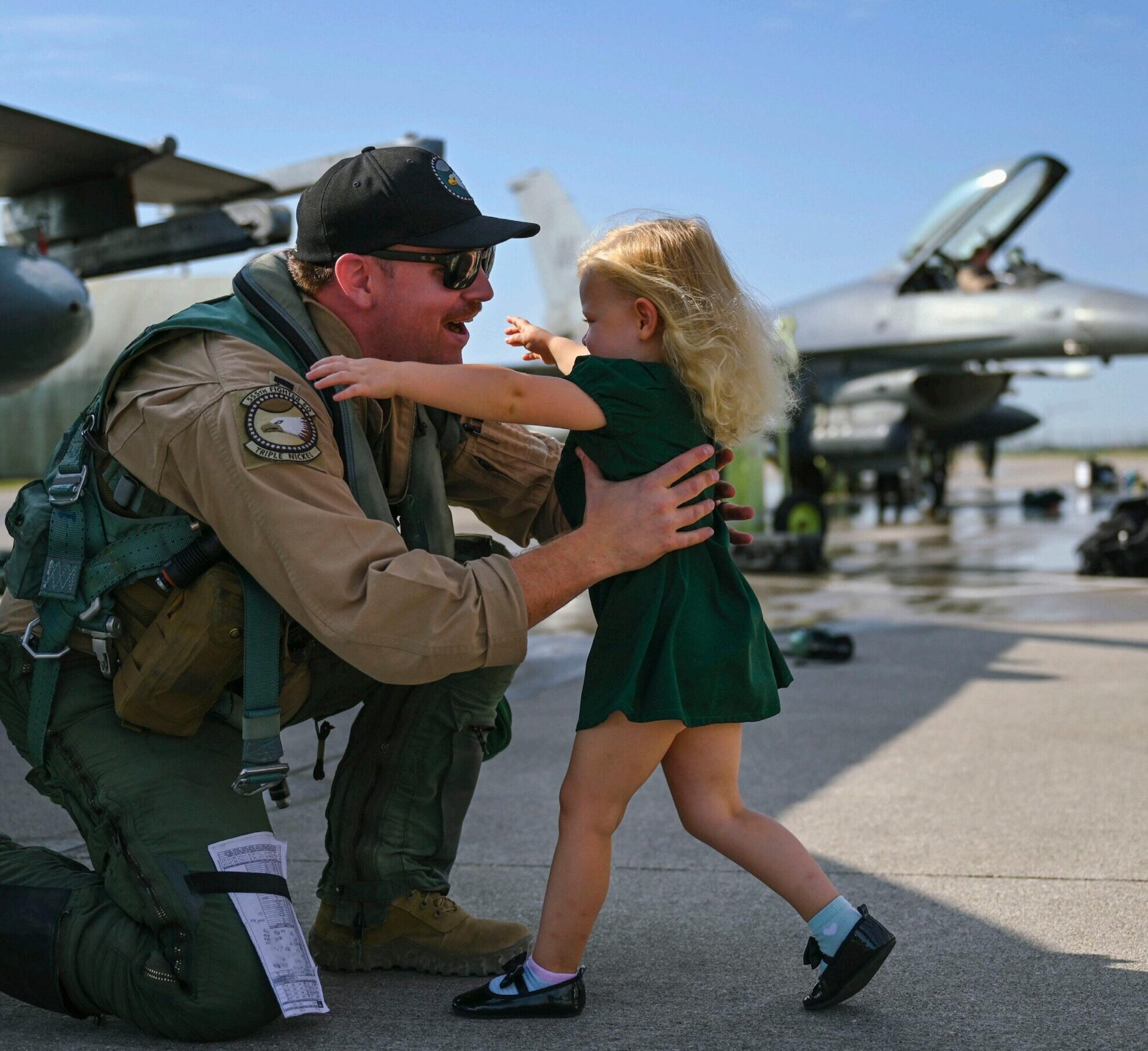
Military Families are the Backbone of a Resilient Force
April 21, 2026 | By Dr. Patrick Donley
In the 38 plus years I’ve been associated with the U.S. military, two truths stand out:
- Military spouses are the unsung heroes of readiness and continuity.
- Military families provide the greatest source of purpose and meaning for uniformed service members.
When the home is in chaos, a service member’s focus is divided and resiliency is weakened. Likewise, when there is no personal beneficiary for one’s sacrifice, it’s much more difficult to pursue excellence in the midst of hardship. In short, family readiness is mission readiness. Military spouses and families enable the effectiveness of U.S. military personnel and provide them with a personal (and tangible) rationale to endure the hardships necessary for victory.
It’s also true that military families often take a back seat to the more obvious contributions of the military member. I can’t count the number of times someone thanked me for my service in the presence of my wife without ever acknowledging her service, leadership, commitment, or sacrifice as a critical enabler of my performance. Without question, she is a full-time leader across a range of activities. Thinking about it now, I sincerely regret not sharing the public’s accolades more deliberately or redirecting their appreciation to my spouse more consistently.
Sometimes I hear military members brag about the number of assignments, countries, and moves they’ve made during their careers. Yet, for all the challenges that frequent moves cause military members, they cause military spouses and families infinitely more. The military prides itself in providing a sponsor for each inbound troop to ease the transition. Upon signing into one’s unit, military members find a familiar chain of command and a supervisor charged with providing individual leadership, development, and care for their troops. There’s also familiarity in the job, an automatic collegiality with one’s co-workers, and a shared passion for the mission.
None of these things are common for military families. The leadership challenges for military spouses are limitless. Spouses must often start afresh, finding new friends, new communities, new job opportunities, as well as new school districts, new mechanics, and new babysitters. They must lead their military children who face similar hurdles with new schools, new routines, new activities, new peer pressures, and new friends.
I’m so proud of AFA’s United Forces & Families program for igniting this change, and it’s impossible to OVER-appreciate military spouses or OVER-estimate the impact of their leadership.
I’m delighted that the Doolittle Leadership Center is now partnering with it to help fulfill AFA’s commitment to “honor and support our Airmen, Guardians, and their Families.” Military spouses are critical leaders in so many respects—leaders in their homes, their workplaces, and their communities; yet, there is very little “leadership training” available to enable their success. Despite their obvious leadership responsibilities, military spouses are expected to “figure it out” in the midst of chaos, over and over again.
To address this gap, the Doolittle Leadership Center is now offering spouse-exclusive Lead Develop Care workshops to interested military bases.
The nine-hour curriculum is based off Terry Cook’s Lead Develop Care leadership methodology that has helped leaders across a diverse range of organizations, roles, and industries become the leaders others WANT to follow. Several Key Support Liaisons (KSL) and military spouses have already been through the curriculum. One KSL had this to say at the culmination:
This workshop is so relevant for military spouses and KSLs, and I truly believe it can really help them grow. They already live at the intersection of leadership, development, and care, but there are times when they’re left without any formal authority or clear boundaries. This course gave me language for what I was already doing, but more importantly, it helped me see what I was missing. I learned that caring for people doesn’t mean carrying everything alone, and that real leadership sometimes means developing others and protecting your capacity so you can show up when it truly matters.
Life is HARD for military spouses, and we don’t appreciate them enough. To say it another way, it’s impossible to OVER-appreciate military spouses or OVER-estimate the impact of their leadership.
We look forward to partnering more fully with United Forces & Families in the future, and we are eager to bring this transformational (and practical) curriculum to a base (or virtual platform) near you!
About the author: Patrick Donley is AFA’s Director, Doolittle Leadership Center. He is a retired Air Force Colonel and holds a Ph.D. in Economics.