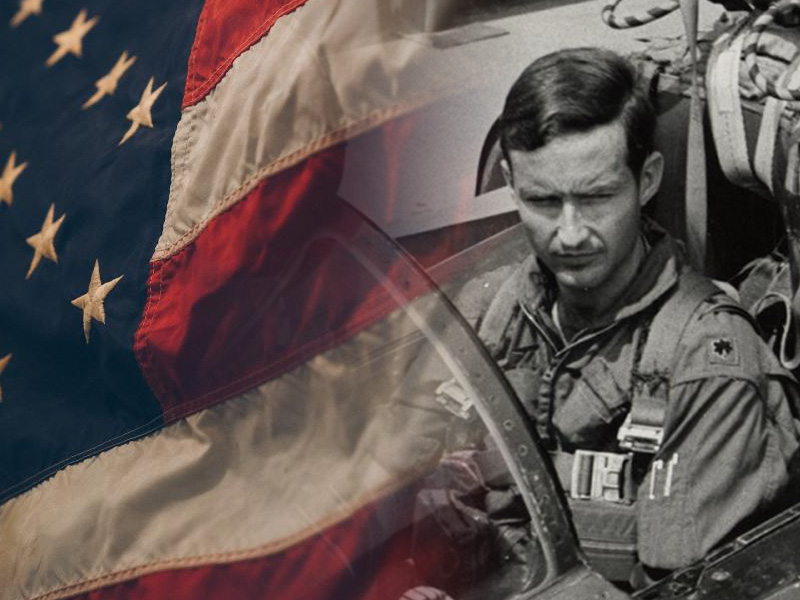
Bob Lodge for Medal of Honor
Help secure the Medal of Honor for Maj. Bob Lodge
“Conspicuous gallantry and intrepidity at the risk of life above and beyond the call of duty.”
Medal of Honor Criteria · United States Congress
Maj. Bob Lodge met that standard on May 10, 1972.
The men he protected that day are fighting to get him the honor he earned.
The choice he made and the promise he kept
Before his final mission, Maj. Bob Lodge told his family and squadron mates what he would do if his plane ever went down over North Vietnam. He knew too much, and knew that if captured, the enemy would extract vital secrets that would compromise future missions and his fellow aviators. Lodge made up his mind on his own, in advance.
On May 10, 1972—the first day of Operation Linebacker—he kept that promise.
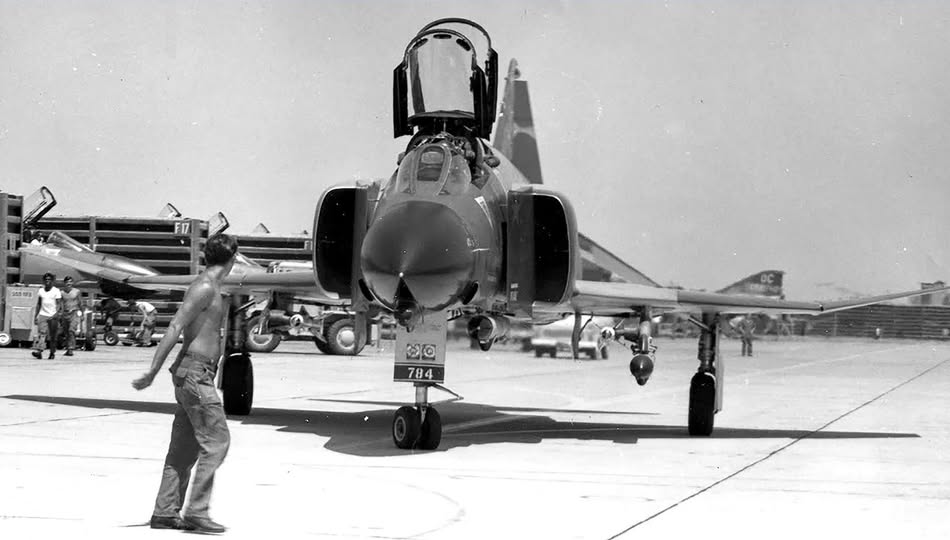
Enemy fire crippled his F-4 Phantom north of Hanoi. As the aircraft caught fire and smoke filled the cockpit, his weapons officer, Capt. Roger Locher, told him it was getting too hot to stay. Lodge’s response was simple: “Ok, why don’t you?”
Locher ejected. Lodge did not, flying the plane into the ground and taking his operational secrets with him
“He made the ultimate sacrifice, deliberately choosing to ride a crippled aircraft to his death to protect that information. Saving other human beings, putting your life at risk, and paying the ultimate sacrifice so that others may live—that is exactly what Major Lodge did. He deserves this.”
— Rep. August Pfluger, R-Texas · Chairman of the Homeland Security Subcommittee on Counterterrorism and Intelligence · Former Air Force combat pilot
About Bob Lodge
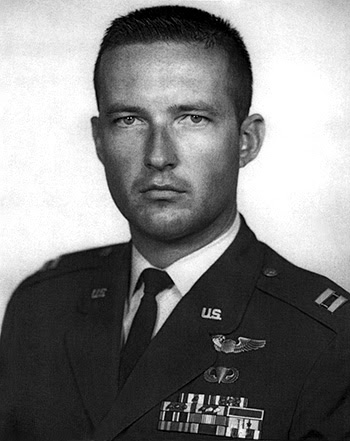
Robert Alfred Lodge was born in New York City on June 30, 1941. He entered the Air Force ROTC program at MIT before transferring to the U.S. Air Force Academy, graduating with the Class of 1964. He later earned a Master of Science in aeronautics at Purdue University.
He flew 186 combat missions across two tours in Southeast Asia and was credited with destroying three MiG-21 fighters in aerial combat.
His fellow airmen considered him the most knowledgeable combat flight leader in fighter operations in the theater. His wing nominated him as one of the ten outstanding young men in America.
Lodge served as chief of the Fighter Tactics Branch for the 432nd Tactical Reconnaissance Wing and flew combat missions as an F-4 Phantom pilot with the wing’s 555th Fighter Squadron.
His development of new tactics, along with his push to equip the wing with more advanced aircraft, helped turn the tide of the air campaign over Vietnam. He is credited with five Silver Stars—the most awarded to any member of the Air Force or Army Air Forces—as well as five Distinguished Flying Crosses.
He was 30 years old at the time of his death.
His story
Watch AFA’s tribute to Maj. Bob Lodge—the choice he made and the legacy he left behind.
The men who came home
Col. Chuck DeBellevue, USAF (Ret.) is the nation’s last active-duty fighter ace. He flew with Bob Lodge. He came home. Lodge didn’t.
For more than 50 years, DeBellevue, Colonel Leonard “Lucky” Ekman (USAF, Ret.), and the men who served alongside Lodge have worked to secure the recognition he never received. Their campaign led to AFA’s support and legislation to posthumously award Lodge the Medal of Honor.
“Had he not died on the 10th of May, he’d have been Chief of Staff. He was that good.”
— Col. Chuck DeBellevue, USAF (Ret.) · America’s last fighter ace
In the News
AFA’s Air & Space Forces Magazine has been tracking the progress of this initiative and the ongoing legacy of Bob Lodge. Explore our recent coverage.