‘Keepers of This Legacy’: Air Force Missileers Celebrate 10th Annual Gathering
September 29, 2026 | By Patrick Fish
America’s missileers are the unsung, silent sentinels of national defense. As part of their Air Force service, they guard, maintain, and operate the United States’ nuclear intercontinental ballistic missile facilities, ensuring these capabilities are available to American decision-makers. Above all, their contributions underpin both America’s nuclear deterrent and strategic stability.
Missileers rarely get to celebrate their accomplishments or their vital role in the nation’s defense. Stationed in America’s heartland, far from the eyes of most Americans, they stand a continual watch above and below ground, always ready to answer the call.
The annual Missileer Gathering, held during the Air, Space & Cyber Conference, gives missileers a chance to celebrate their heritage and pass it on to the next generation. This year, on September 15, the Air & Space Forces Association (AFA) and the Association of Air Force Missileers (AAFM) marked the 10th Annual Missileer Gathering. Hosted by AFA’s Virginia-based General Charles A. Gabriel Chapter, the event drew missileers from across the country, whose service spans decades, back to the earliest days of the ICBM force.
“We started this in 2017 to provide a way for missileers, those who earned an Air Force Missile Badge, Missile Operations Badge, or Missile Maintenance Badge, to get together … and recognize our hard-working missileers providing strategic deterrence 24/7-365,” said Joe Burke, former Gabriel Chapter president and AFA national director emeritus.
Burke also told the crowd that 2026 marked not only a decade of the gathering but also several key milestones for the missileer profession. He noted it was 80 years since the start of the nation’s first ICBM program, which began under Army supervision and, a year later, transferred to the newly created Air Force—eventually producing the Atlas missile. The year also marked the 55th anniversary of the first Minuteman III wing reaching full alert status in 1971.
Gen. Stephen L. Davis, Commander of Air Force Global Strike Command; Rich Anderson, Assistant Secretary of the Air Force for Manpower and Reserve Affairs; Mark Jantzer, mayor of Minot, N.D.; Kathleen Ferguson, Board Chair of AFA; and Col. Aaron C. Baum, Deputy Commander of the 341st Missile Wing, were among the leaders in attendance.
At the event, AFA also presented the General Thomas S. Power Award to the Air Force’s Missile Crew of the Year, 1st Lt. Jacob Jenkins and 1st Lt. Thales Santos, from the 12th Missile Squadron, 341st Missile Wing at Malmstrom Air Force Base, Mont. Capt. Nathan Barry accepted the award on behalf of Santos, who was unable to attend. Kevin Eastland, executive vice president of AFA’s Gabriel Chapter, presented the crew with the chapter’s 2026 Missileer Gathering challenge coin.
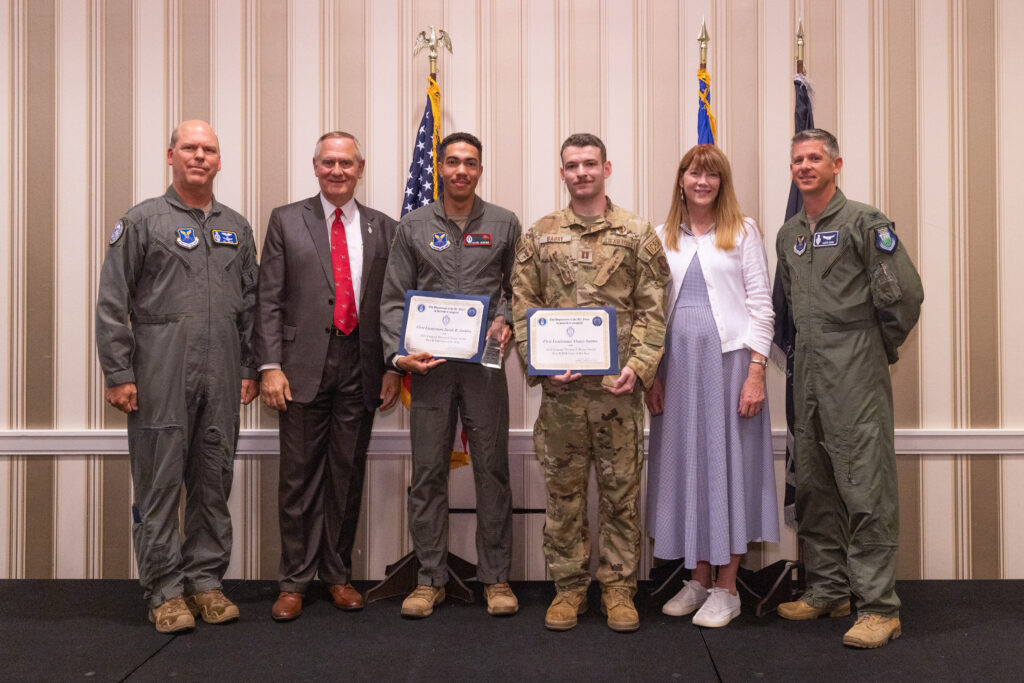
The General Thomas S. Power Award is presented annually to recognize the best ICBM crew in the Air Force, emphasizing excellence in missile operations. Recipients are selected for operational performance, teamwork, and mission success that reflect the service’s highest standards.
Jenkins and Santos commanded Air Force Global Strike Command’s $37 million, 45-day Minuteman test launch, leadding 50 Airmen through more than 300 pre-launch tests, and led the wing through 21,600 combat alert hours that included retargeting six ICBMs and responding to a launch control center fire. They also developed the plan that returned a $5.2 million launch control center to full alert status ahead of schedule while overseeing the safe removal of classified material during a two-year carcinogen remediation effort.
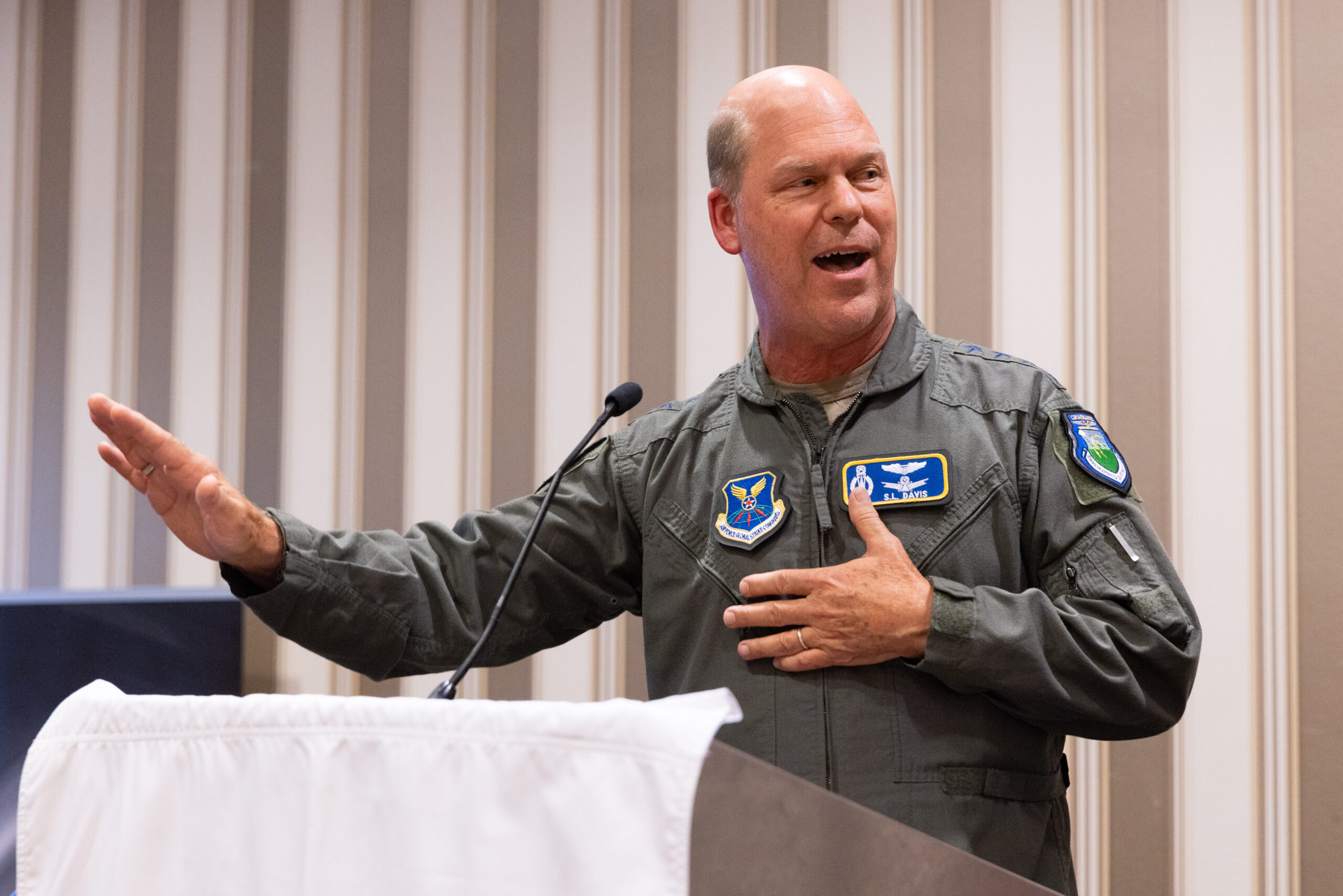
“Congratulations, well done,” Davis told the award winners, recalling their years’ worth of effort, work, and contributions as missileers. He polled the crowd, asking who in the room had served on which missile system, and found veterans of systems ranging from Titan to Minuteman. He later added, “Hopefully we see some future Sentinel squadrons.”
“Thanks to everyone who supports our missileers, and most of all, thanks to all of you in this room and around the world that have stood watch, and those who are standing watch today,” Ferguson said.
“All of you in this room carry on a proud tradition,” Anderson told the audience of missileers past, present, and future. “You are keepers of this legacy, and I cannot thank you enough for being here … You make me proud to be part of this great ICBM family.”
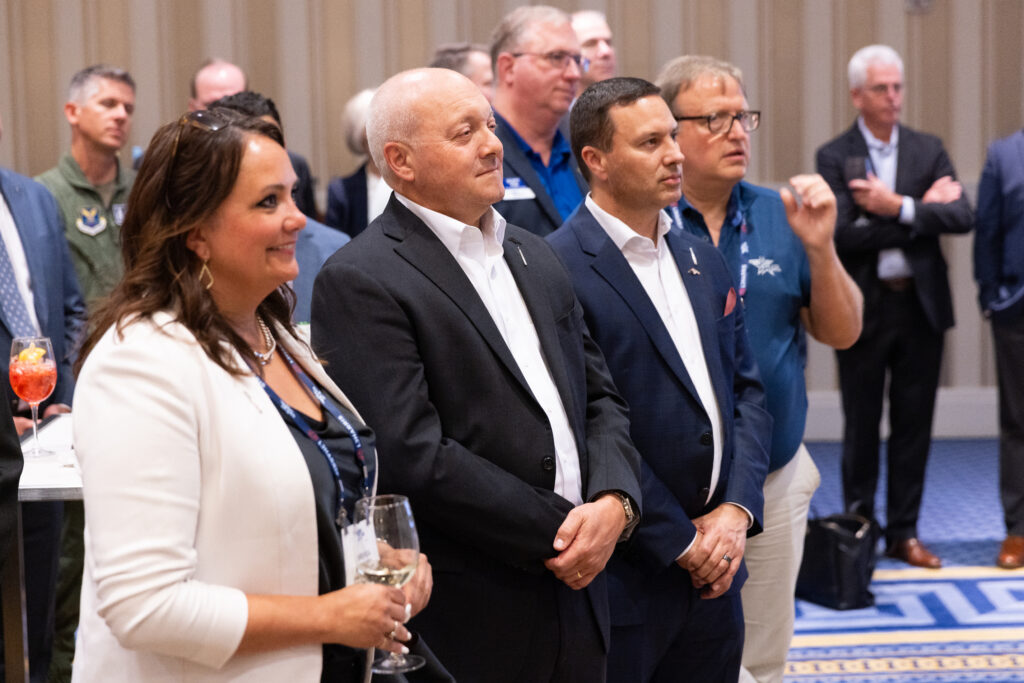
As part of the evening’s program, the Gabriel Chapter recognized the community partners who helped make its work—and the missileer gathering—possible. Representatives from Boeing, Amentum, BAE Systems, General Dynamics, Systems Planning and Analysis, Lockheed Martin, and Northrop Grumman each received an AFA community partner plaque and a missileer gathering challenge coin.
“I think I can speak on behalf of all of the partners that we are just extremely grateful for the men and women of this ICBM community that are there operating, maintaining, securing America’s ICBM fleet 24/7-365, protecting us, and we appreciate that,” said Amanda Davis, Vice President and General Manager of Strategic Deterrent Systems at Northrop Grumman.
Col. Linda Aldrich, USAF (Ret.), one of the missile force’s first female officers, also addressed the audience as AFA Rocky Mountain Region president and a director of the Association of Air Force Missileers. Aldrich described the missileers association as a critical resource that helps past and present missileers find and stay connected with those they served alongside. She also highlighted the association’s work for its members and the broader community, including scholarships, heritage recognition, and raising awareness of health issues linked to missileers’ service in missile launch facilities.
Aldrich also spoke about the Air Force Missileer Hall of Fame, which the association created to ensure the ICBM community’s operators, maintainers, and security personnel receive the recognition they deserve in an often-overlooked field. The Hall of Fame’s first class was inducted in 2024, with a second class announced in 2026. Current and future classes will be featured in a video display installed at the National Museum of the United States Air Force at Wright-Patterson Air Force Base, Ohio. Aldrich thanked the AFA Heritage Committee for a $3,000 grant that helped install a sister Hall of Fame display at the Strategic Air Command & Aerospace Museum in Nebraska. She closed by calling for nominations for the Hall of Fame’s next class so future generations can be recognized as the unsung, silent sentinels of national defense.
Special thanks to Joe Burke for his assistance with this article.