AFA Chair Lays Out Her Vision for Boosting AFA’s Impact
October 14, 2026
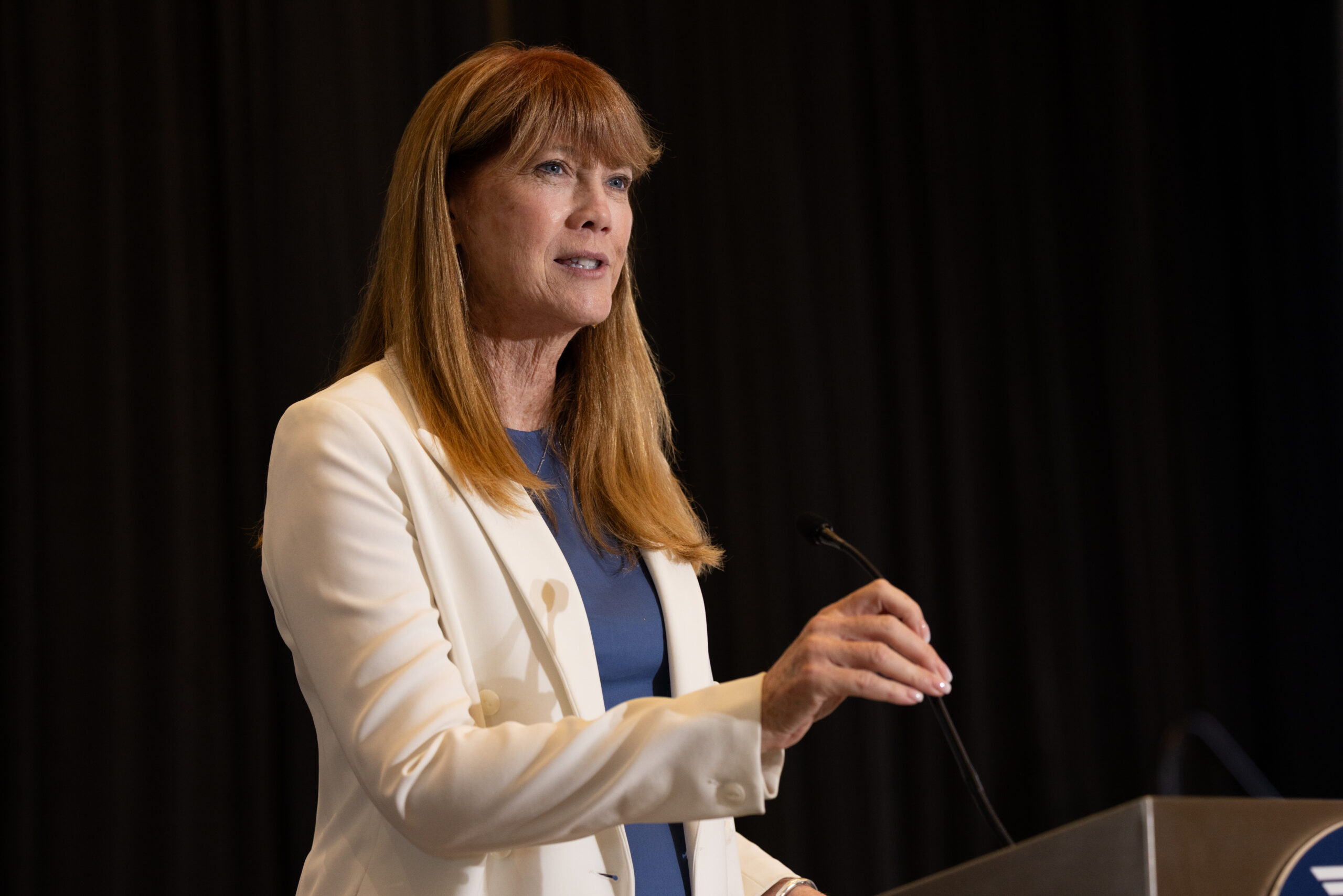
“We need to have greater impact,” said Kathleen Ferguson, chair of the board of the Air & Space Forces Association, to delegates at the association’s 77th annual National Convention held September 12–13 in National Harbor, Md.
The remark came as Ferguson discussed membership, where she said the association must ensure members feel connected to its mission, have meaningful opportunities to contribute, and see AFA as relevant to their lives and service.
Ferguson—who took the helm of AFA’s board a year ago—told the delegates a story about what AFA members can do in their communities. A few years ago, a former Air Force chief of staff visiting a military installation told the community, which included AFA members, that he needed more digital engineers. Within a year, the community had persuaded a local university to create a digital engineering certificate program, and local civilians were able to take it for free. She called it “a single example of the power that a community and association can have to help the department execute a mission.”
Under the board’s leadership, AFA is drafting a five-year strategic plan with input from across the entire association, to replace the current strategic plan after it expires at the end of 2026. The process includes interviews with board members, staff, field and chapter leaders, committee and council leaders, and other members, and the team will also seek the perspectives of senior Air Force and Space Force leaders.
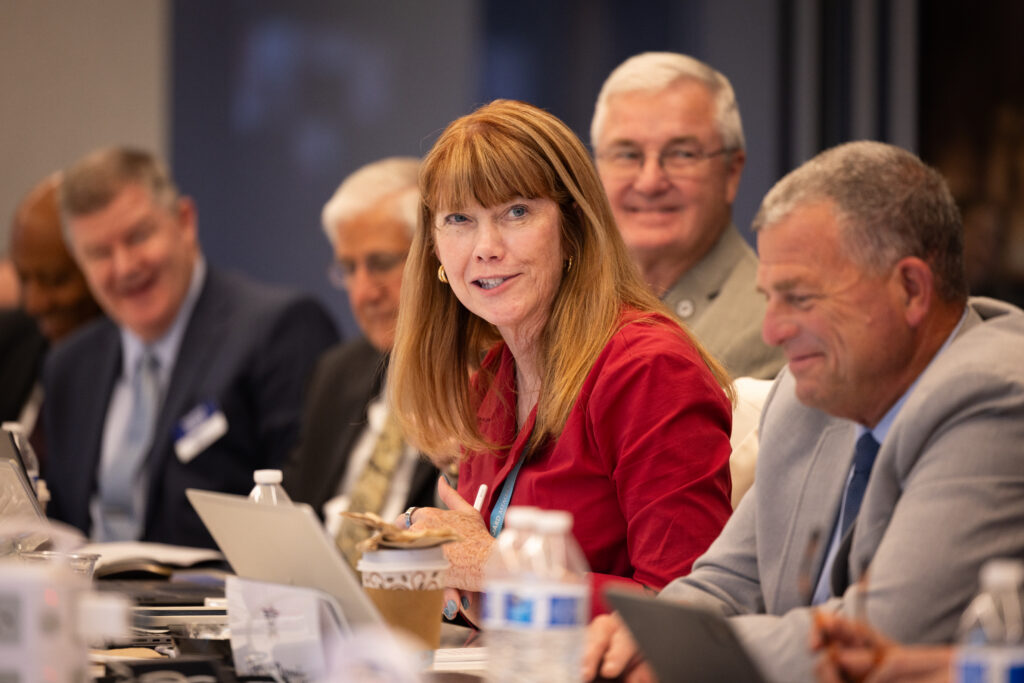
Ferguson said her first year as chair of the board sharpened her vision for AFA. Among the lessons: membership growth is not enough unless members are engaged in meaningful work, greater visibility is not enough unless it brings greater influence, and strong programs are not enough unless they deliver the intended results.
As the first career civilian elected to chair the board, she also drew on her background serving as an Air Force civilian for 35 years and as a military spouse, saying her time in the Pentagon gave her a different perspective to see “how decisions made in Washington affect the missions and the people in the field.”
Her vision calls for an AFA that is more focused on where it can lead and have the greatest impact, and more influential in shaping decisions affecting airpower, spacepower, and the people who deliver them. Every part of the association should understand its role and be accountable for results, and AFA should have the resources and organizational strength to sustain its mission “well into the future.” Ferguson described those goals as the principles that should guide the next strategic plan.
AFA’s strong mission statement explains why the association exists, and the “educate, advocate, and support” pillars describe how it operates, Ferguson said. The strategic objectives in the next plan must define the outcomes AFA intends to achieve, and every program should be tied to them. Leaders should ask of each program, “What strategic objective does this program support?”
Ferguson also pressed for clearer roles across the association. “Commitment alone doesn’t guarantee alignment,” she said, noting ambiguity over who has decision-making authority and who is accountable for results. The board sets strategic direction, approves policy and resources, and holds the president and CEO accountable, while the CEO and professional staff run daily operations. Field leaders and volunteers carry AFA’s advocacy and programs into their communities and bring back what they learn. In her view, “clarity empowers people to perform their roles well.”
AFA was built across 80 years by people who understood the needs of their time and had the courage to respond, Ferguson said, and the way to honor them is to show the same willingness to evolve. “Every successful organization must continue to learn, to grow and change,” she said, or it becomes “less relevant and ultimately obsolete.”