AFA Connects Past to Future at Dahlonega’s Air Force Heritage Celebration
November 24, 2026 | By Laurie Orth
Honoring the past while inspiring the next generation became a central theme of Dahlonega’s Military Heritage Museum’s “Honoring the Air Force” weekend, held September 19–20, 2026. The two-day celebration brought together military veterans, families, historians, and community members to commemorate the United States Air Force’s 79th birthday and preserve the stories of those whose service shaped American airpower. The Air & Space Forces Association’s East Georgia Chapter 137 participated in the celebration, represented by Dr. Kimberly A. Jackson, Vice President of Leadership Development and Programs.
The museum’s program featured historical artifacts, military memorabilia, educational presentations, an Air Force birthday cake cutting, and a screening of the original 1944 film “Memphis Belle.” Among the weekend’s most compelling experiences were encounters with individuals whose personal histories reflected different dimensions of military service.
Lt. Col. Lewis M. “Lew” Houser, USAF (Ret.), a distinguished Vietnam War combat pilot, brought decades of Air Force history to life through a personal collection of military uniforms, flight gear, photographs, and memorabilia. Commissioned in 1964, Houser pursued a career in military aviation that included flying the F-4 Phantom II during the Vietnam War, completing approximately 250 combat sorties in Southeast Asia. His service placed him among the Airmen who carried out demanding combat missions during one of the most challenging periods in American military aviation.
Houser’s career extended well beyond his Vietnam combat experience. He subsequently flew the A-7 Corsair II and served in operational and leadership assignments in Europe and the United States. His experience across different aircraft and missions reflected the evolving capabilities of American tactical airpower and the responsibilities entrusted to military aviators during the Cold War era. From combat operations to subsequent leadership roles, his career represented a sustained commitment to service and the development of Air Force operational capability.
At the museum’s celebration, Houser stood beside his flight uniform and a photograph from his flying years, giving visitors a personal connection to the history represented by the artifacts. Rather than simply viewing military memorabilia, attendees could encounter the individual whose experiences gave those objects meaning. Houser and his wife, Diane, also sponsored the weekend’s screening of “Memphis Belle,” further supporting the museum’s mission to preserve and share the stories of American military aviation across generations.
Another distinguished participant was retired Col. Leon F. “Lee” Ellis, USAF(Ret.), a decorated Vietnam War fighter pilot, former prisoner of war, and leadership author whose experiences have inspired generations of military and civilian leaders. A Georgia native and distinguished graduate of the University of Georgia’s Air Force ROTC program, Ellis was commissioned in 1965 and trained as an F-4 Phantom II pilot. On November 7, 1967, his aircraft was shot down over North Vietnam. Captured by enemy forces, Ellis spent 1,955 days as a prisoner of war, enduring isolation, harsh conditions, and torture in prisons that included the infamous Hanoi Hilton. He was released on March 14, 1973, during Operation Homecoming, returning to the United States after more than five years in captivity. Rather than ending his military career, Ellis returned to active duty, eventually serving in command and leadership education assignments before retiring as a colonel.
His wartime experiences became the foundation for a second career devoted to developing leaders of character, courage, and integrity. Through books including “Leading with Honor: Leadership Lessons from the Hanoi Hilton” and “Captured by Love,” Ellis has preserved the lessons of captivity, resilience, and the bonds that sustained American prisoners of war. During the museum’s celebration, he generously donated copies of his books, helping ensure that these firsthand accounts and leadership lessons continue reaching future generations.
The weekend also recognized a group whose contributions to the Vietnam War are less widely known. Liz Mangum, a Vietnam-era American Red Cross “Donut Dollie,” represented the civilian women who volunteered to serve alongside American military personnel during one of the nation’s most challenging conflicts.
Part of the American Red Cross’s Supplemental Recreation Activities Overseas program, approximately 627 Donut Dollies served in Vietnam between 1965 and 1972. These college-educated women volunteered to travel thousands of miles from home, often visiting remote military installations and combat-area bases to provide recreation programs, companionship, and encouragement to American service members. Despite their lighthearted nickname, their responsibilities frequently placed them in demanding and potentially dangerous environments.
Their mission extended far beyond entertainment. Through games, conversation, and personal interaction, Donut Dollies offered service members moments of normalcy amid the pressures of war. Their presence reminded troops of the families, friendships, and communities waiting for them at home. Mangum’s participation in the museum’s celebration helped illuminate this often-overlooked chapter of military history and the important role civilian volunteers played in sustaining the morale and resilience of those serving overseas.
Education was another central component of the museum’s program. Featured speaker Dr. Douglas Campbell brought a combination of operational aviation experience and academic expertise to the celebration.
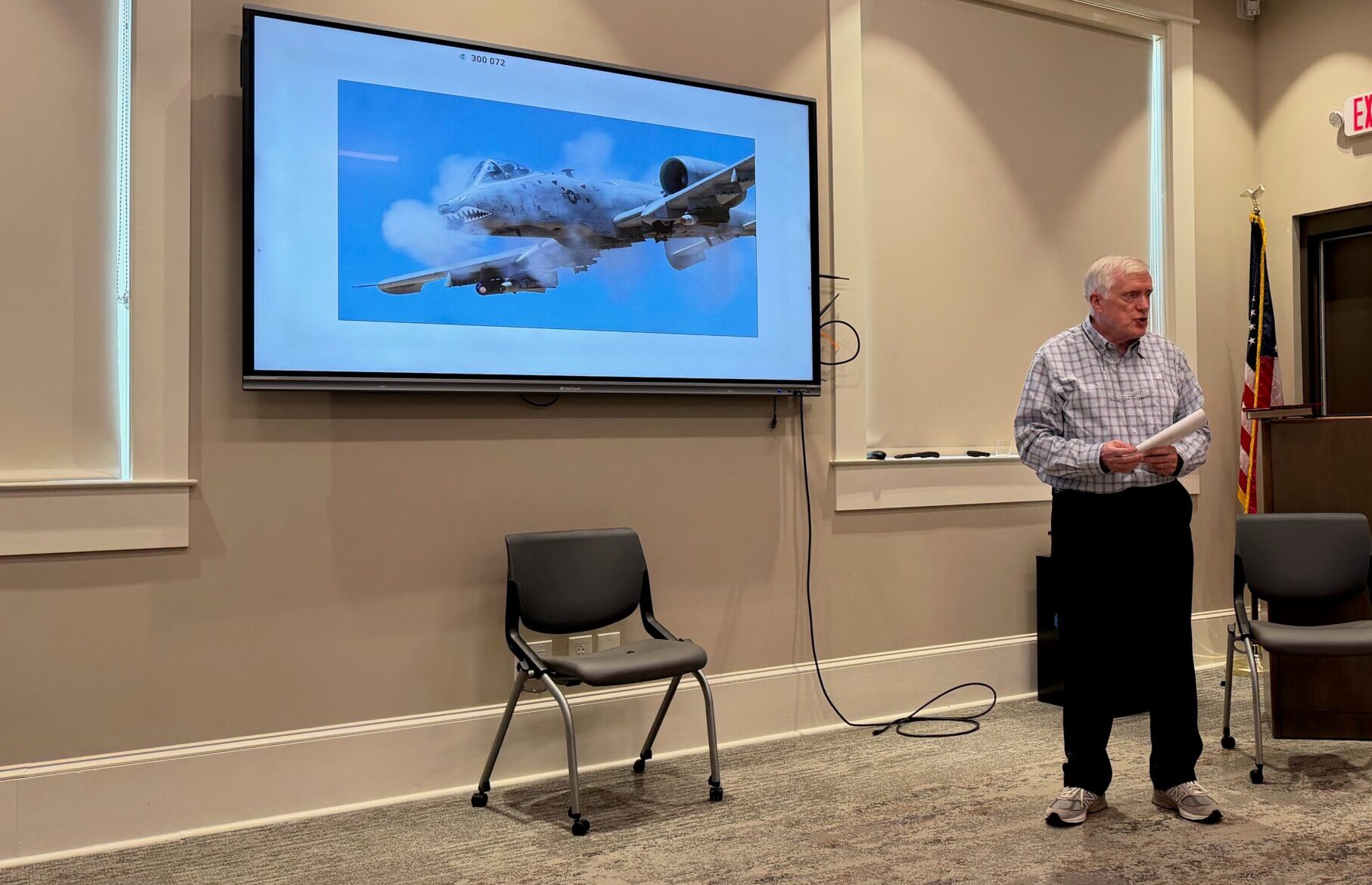
A graduate of North Georgia College’s Corps of Cadets, Campbell began his military aviation career in the U.S. Navy, flying A-7E Corsair II attack aircraft aboard the USS Kitty Hawk. After transferring to the Air Force in 1984, he flew A-10 Thunderbolt II aircraft in Europe and served in tactical testing at Nellis Air Force Base, Nevada. He later flew the F-117 stealth fighter, including assignments involving operations in Saudi Arabia, before retiring as a lieutenant colonel in 1994.
Campbell subsequently earned a doctorate in history and authored “The Warthog and the Close Air Support Debate.” His career as a military historian and instructor has included educating future Army officers, providing a direct connection between operational experience, military history, and the development of future leaders.
The museum’s emphasis on education created a natural connection with AFA’s mission to Advocate, Educate, and Support.
During Dr. Jackson’s presentation and the accompanying question-and-answer session, she shared AFA’s mission, membership benefits, and opportunities to help strengthen the Air and Space Forces, support military families, and develop future generations of leaders.
The response extended beyond several new memberships. Attendees expressed interest in participating in chapter meetings and volunteering for future initiatives. One community member offered the use of her space to host chapter events, creating a potential venue for additional outreach and engagement.
A grandparent also inquired about bringing AFA’s CyberPatriot program to a local high school. CyberPatriot, AFA’s National Youth Cyber Education Program, introduces students to cybersecurity, teamwork, problem-solving, and career opportunities in science, technology, engineering, and mathematics. The inquiry created an opportunity for the chapter to explore expanding its educational outreach to local students.
These conversations illustrated how participation in a community-led heritage celebration can create lasting connections between veterans, educators, families, and future generations.
Dahlonega’s Military Heritage Museum is dedicated to honoring veterans, preserving military artifacts, and educating future generations about the community’s military legacy. Its Air Force weekend brought that mission to life through the stories of those who served, the artifacts they preserved, and the knowledge they shared.
For East Georgia Chapter 137, the experience reinforced the connection between preserving military heritage and preparing future generations to serve, lead, and contribute.
From the combat experiences of Vietnam-era Airmen to a new generation exploring cybersecurity, the weekend demonstrated how Air Force heritage is a living legacy that can educate, inspire, and help shape the future.