Cadets, Steele Chapter Honor Hap Arnold on Air Force’s Birthday
September 29, 2026
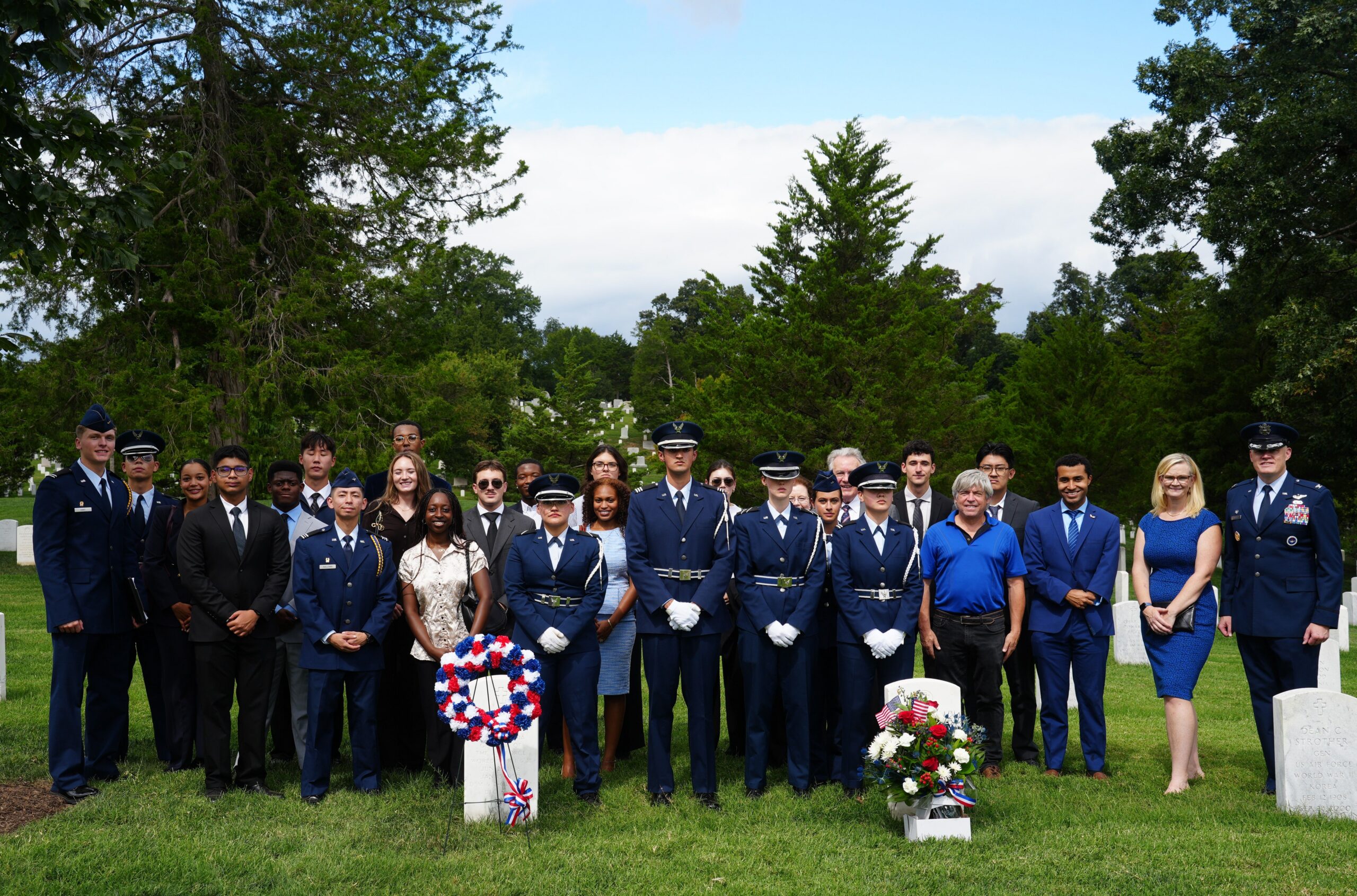
The AFA D.W. Steele Sr. Chapter joined more than 30 Arnold Air Society and Silver Wings cadets at Arlington National Cemetery on September 18, the United States Air Force’s 79th birthday, to honor the life and legacy of General of the Air Force Henry H. “Hap” Arnold.
Cadets from Arnold Air Society squadrons at Howard University and the University of Maryland, along with Silver Wings members from American University, came together for the remembrance. The cadets led the planning and execution of the ceremony, with support from the Steele Chapter.
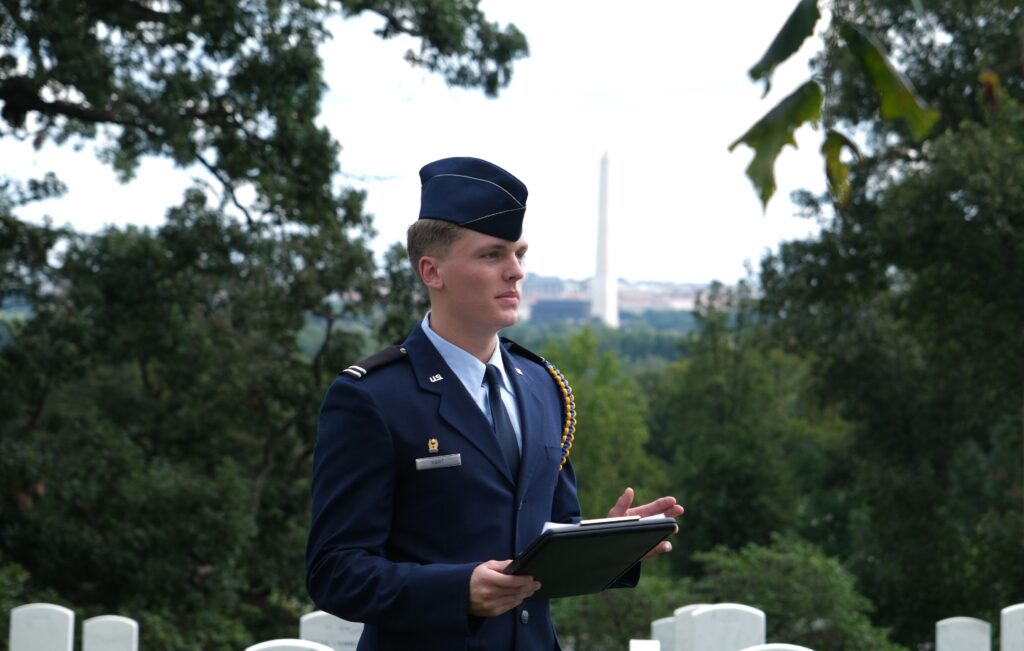
For the Cadets, the setting was particularly meaningful, as Arnold, the namesake of Arnold Air Society and a key architect of American airpower, is buried on a hillside at Arlington overlooking the Air Force Memorial and the nation’s capital.
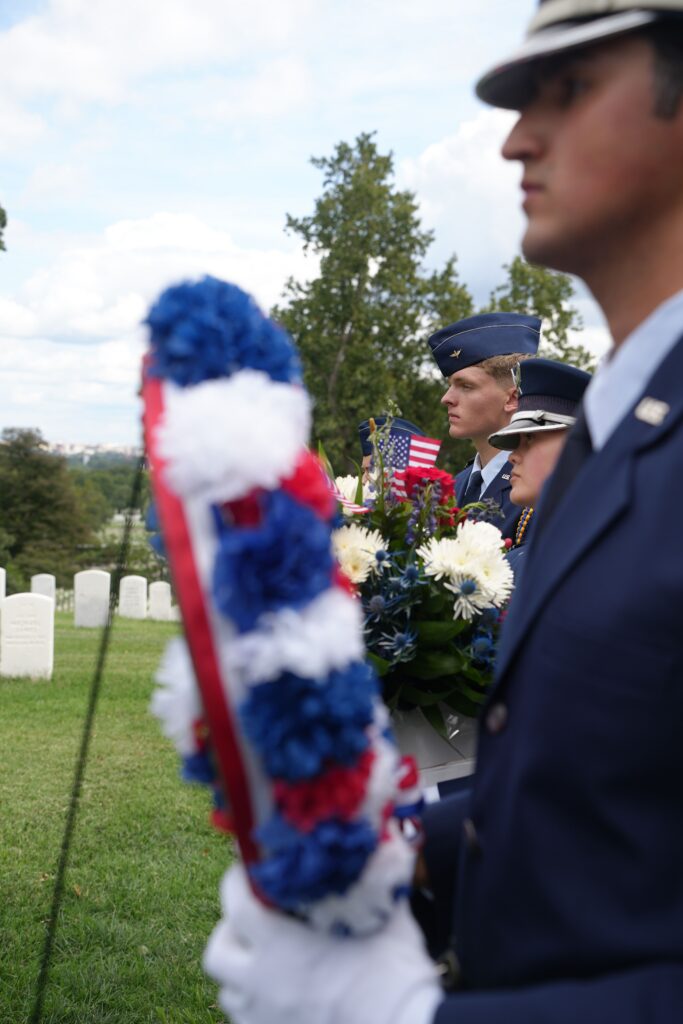
Members of the University of Maryland’s Frank P. Lahm Squadron Honor Guard laid flowers at the gravesites of Arnold and his wife, Eleanor “Bee” Arnold, as well as their son, Col. Bruce Arnold, USAF (Ret.), and his wife, Barbara.
Steele Chapter Secretary Bob Hill spoke about Arnold’s remarkable career, from learning to fly under the supervision of the Wright brothers in 1911 to leading one of the largest expansions of airpower in American history.
In the summer of 1941, the Army Air Forces had approximately 152,000 people and fewer than 7,000 aircraft. Under Arnold’s wartime leadership, the force grew to more than 2.4 million men and women and operated nearly 80,000 military aircraft at its peak. Arnold became the first and only five-star general in Air Force history following the service’s separation from the Army in 1947.
Arnold also continually looked to the future, pushing for investments in scientific research, technological innovation, and novel ways of thinking about airpower. He understood that tomorrow’s Air Force could not simply rely on yesterday’s ideas.
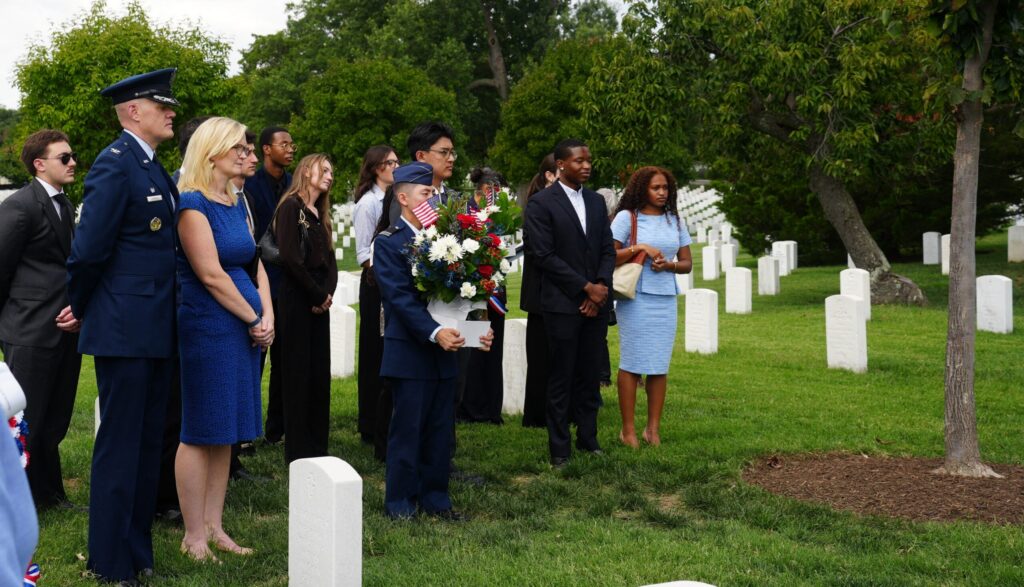
The ceremony also honored the Arnold family and the sacrifices that came with military service. Eleanor shared in the challenges, separations, and frequent moves of her husband’s long career. Their son Bruce followed his father into the Air Force, becoming a pilot and colonel. He married Barbara Douglas, daughter of Donald Douglas, founder of the Douglas Aircraft Company.
Their son, Robert Arnold, later served on the Air Force Memorial Site and Design Committee, helping make possible the memorial that today can be seen from his grandfather’s gravesite.
Although Robert Arnold was unable to attend the remembrance, he prepared special remarks that were read by a cadet. He reflected on his grandfather’s service and determination to advance American airpower and establish an independent Air Force. He also shared a motto his grandfather said he learned from the Wright brothers: “Nothing is impossible.”
For the cadets gathered at Arlington, the remembrance offered an opportunity—beyond honoring American aerospace heritage—to reflect on the responsibilities they will assume as future Air Force and Space Force officers and leaders.
“For the members of Arnold Air Society, General Henry ‘Hap’ Arnold is more than a historical figure,” said Frank P. Lahm Squadron Commander Ryan Hart. “He represents the vision, innovation, and selfless service that built the United States Air Force. It is both an honor and a responsibility to carry his name as we prepare ourselves to become the next generation of leaders.”
Standing beside Arnold’s grave on the Air Force’s birthday provided a tangible connection between generations—the pioneers who helped create American airpower and spacepower, the Airmen and Guardians who carried that legacy forward, and the cadets preparing to lead the Air Force and Space Force of the future.
For the Steele Chapter, the remembrance reflected an important part of its mission to mentor and support the next generation of Air Force and Space Force leaders and to preserve the heritage of those who came before them. Through continuing partnerships with Arnold Air Society, Silver Wings, AFROTC, and other cadet organizations, the chapter helps connect today’s Airmen and veterans with tomorrow’s leaders, ensuring that the legacy of pioneers such as Hap Arnold continues to inspire future generations.