Educating Educators: What My Tour of an Air Force Base Taught Me for My Students
August 31, 2026 | By Laurie Orth
What happens when an educator who is also an AFA chapter president and a passionate STEM advocate steps onto an Air Force base for an immersive recruiting experience? For me, the Air Force Recruiting Service’s Enlisted Accessions Educators Tour at Goodfellow Air Force Base became far more than a visit. It was a fast-paced, eye-opening look at the people, training, and purpose behind today’s Air Force, and it showed me how service members are developed not just into Airmen, but into confident communicators, technical experts, and future community leaders.
Twenty-seven educators, high school counselors, and after-school program leaders took part in the Educators Tour at Goodfellow Air Force Base in San Angelo, Texas, on July 21-22, 2026, gaining an inside look at Air Force careers such as intelligence, medical services, fire protection, security forces, logistics, and communications.
Arrival at Goodfellow
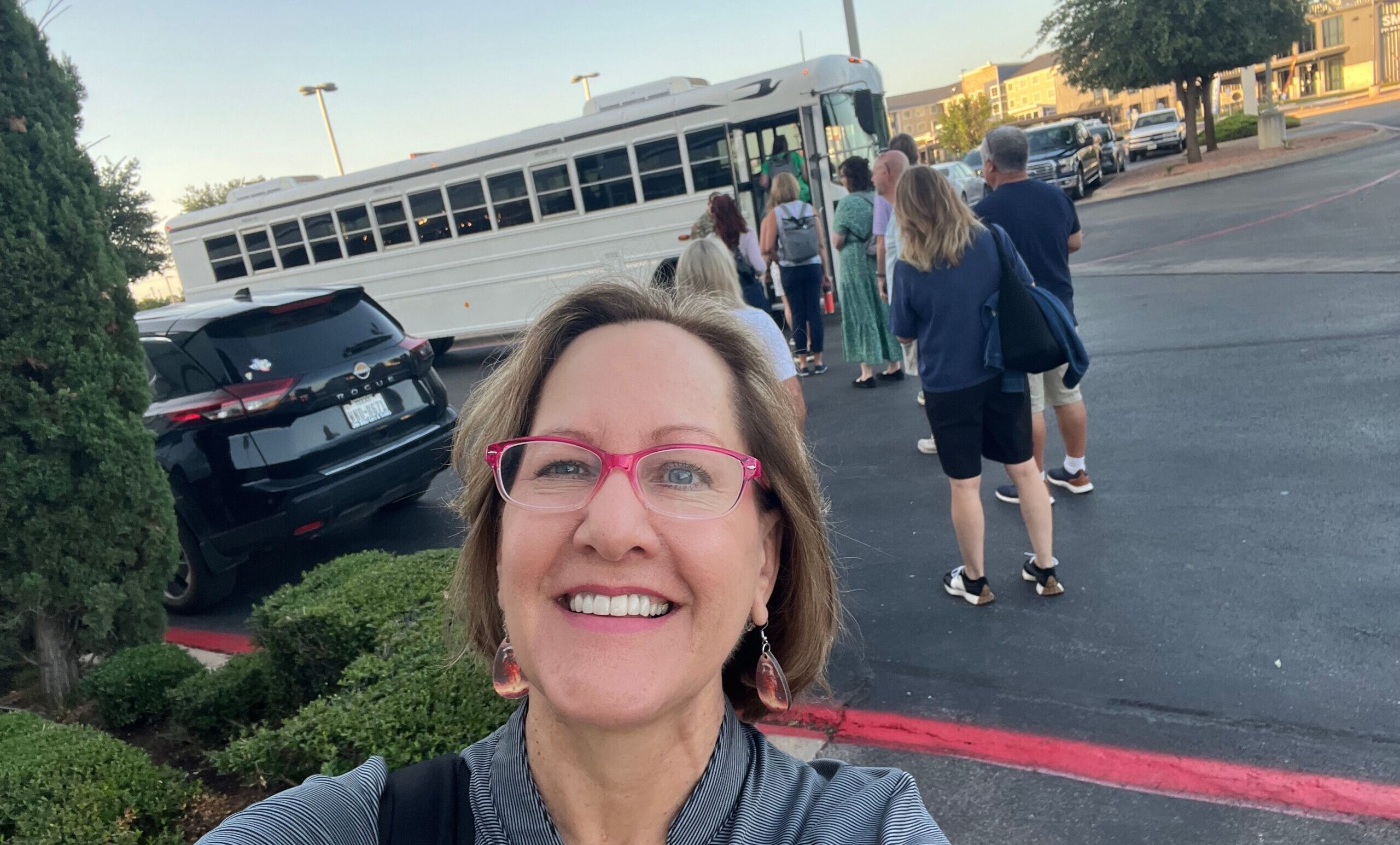
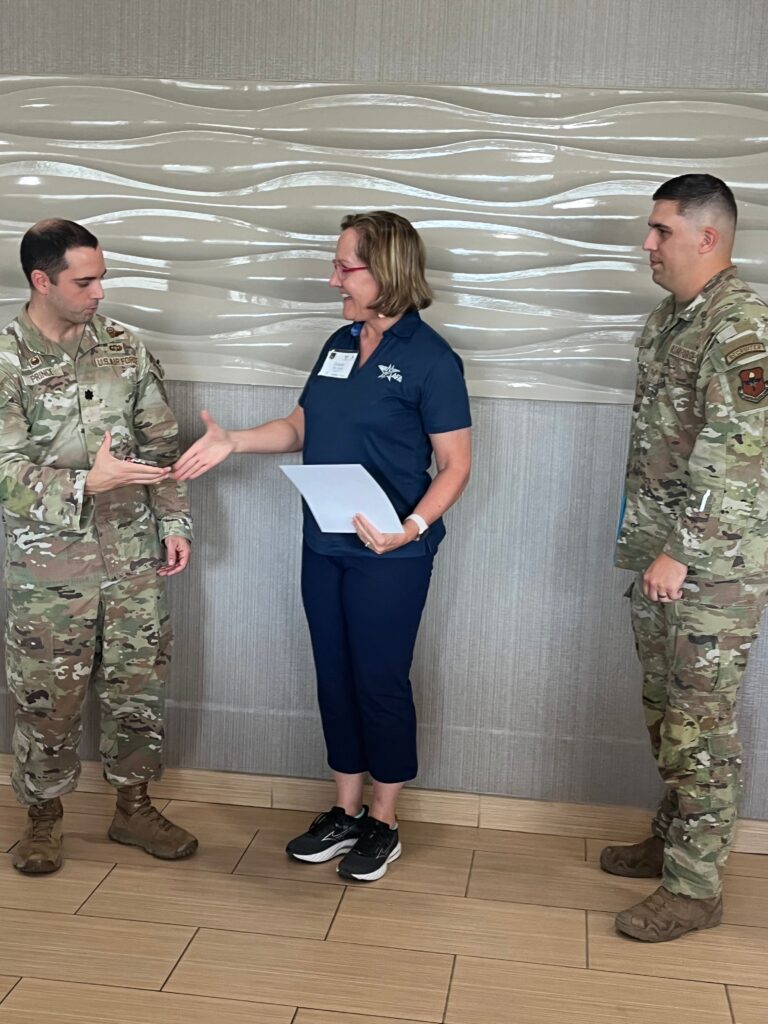
After a long day of travel from Georgia, I got to know a few of the educators riding in my van from San Angelo Airport to the hotel. Upon arrival, we were treated to a welcome reception, hosted by Col. Kristy L. Moore, deputy commander of the Air Force Recruiting Service, and attended by recruiters, educators, base, and community leaders. The U.S. Air Force Band of the West provided music for the event, and as a professional musician, I spent time visiting with the band members. I saw firsthand how connected the Air Force really is when I reconnected with Goodfellow Air Force Base commander Col. Matthew Norton, whom I had met a few years earlier when he commanded the 480th Intelligence, Surveillance and Reconnaissance Group at Fort Gordon in Augusta, Ga.
A First Look at the Mission
The first full day began with an overview of Goodfellow’s history and mission, followed by a deep dive into career fields many civilians rarely see up close. Rather than focusing only on aircraft, the tour highlighted a broad range of specialties that keep the Air Force operating daily.
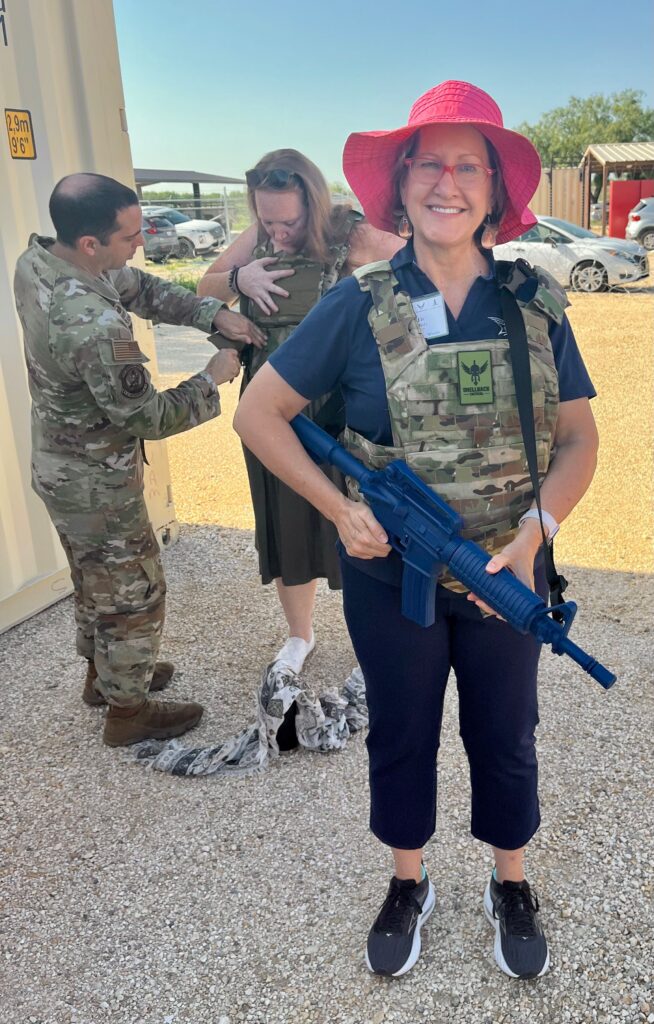
In the medical group, we met junior enlisted Airmen who confidently briefed us on their roles in areas such as flight medicine, immunizations, optometry, dental care, pharmacy, and laboratory services. One demonstration on tourniquet use was especially memorable, showing the seriousness and urgency of medical response training. Other stops included interactive exercises, such as triaging patient scenarios and participating in hands-on medical activities. For me, one of the strongest impressions was how well these young Airmen communicated.
Later that day, we visited security forces, where we saw another side of Air Force readiness. We observed working dogs, equipment demonstrations, and training scenarios that showed the demands placed on personnel responsible for installation security and law enforcement.
The tour also included a look at the many support career fields that help sustain the force, from logistics and civil engineering to human resources, communications, and force support.
Day Two
The second day of touring highlighted some of Goodfellow’s most demanding training pipelines, including intelligence and firefighting. In the intelligence training area, we learned how selective and academically rigorous the field can be. Airmen in the program study topics ranging from coding and electronics to orbital mechanics and seismology.
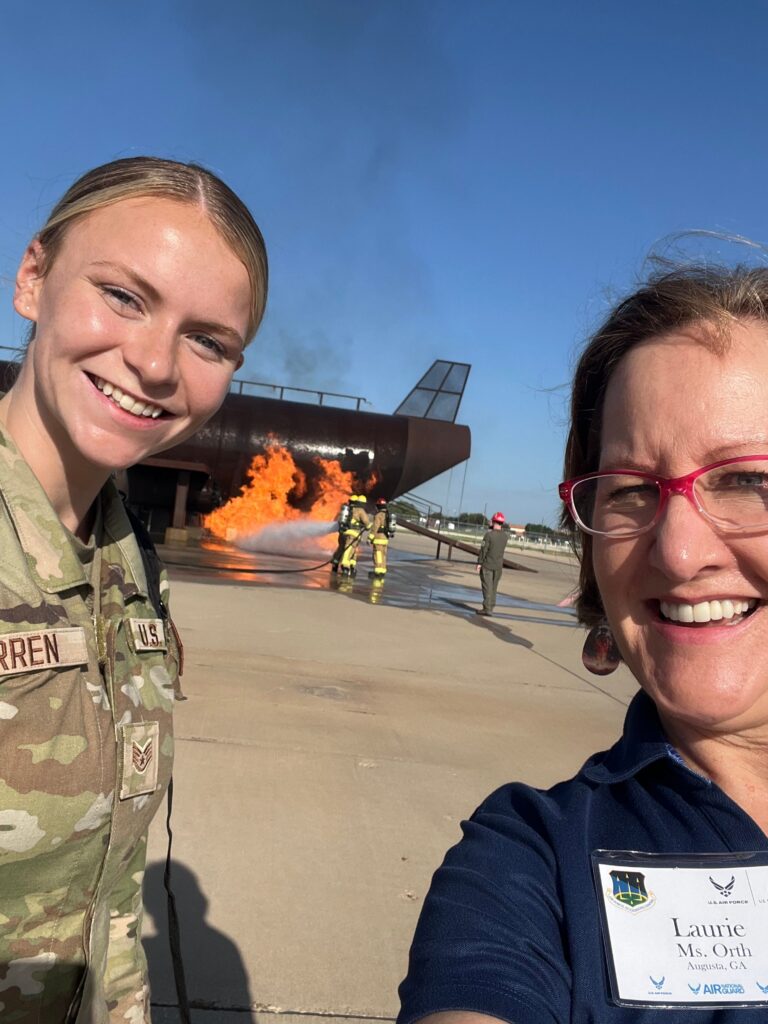
The firefighting training visit offered a different kind of intensity. We saw the physical demands of the profession and the scale of the training facilities, worked in temperatures over 100 degrees Fahrenheit, and heard about a career field that remains in high demand. The message from the instructors to us was practical and direct: students entering these fields need resilience, discipline, and the ability to receive corrective guidance.
Conversations with instructors emphasized that many high-achieving students struggle when they first encounter failure in a high-stakes environment. Educators, they said, can better prepare students by challenging them, teaching perseverance, and helping them build strong communication skills before they ever sit down with a recruiter.
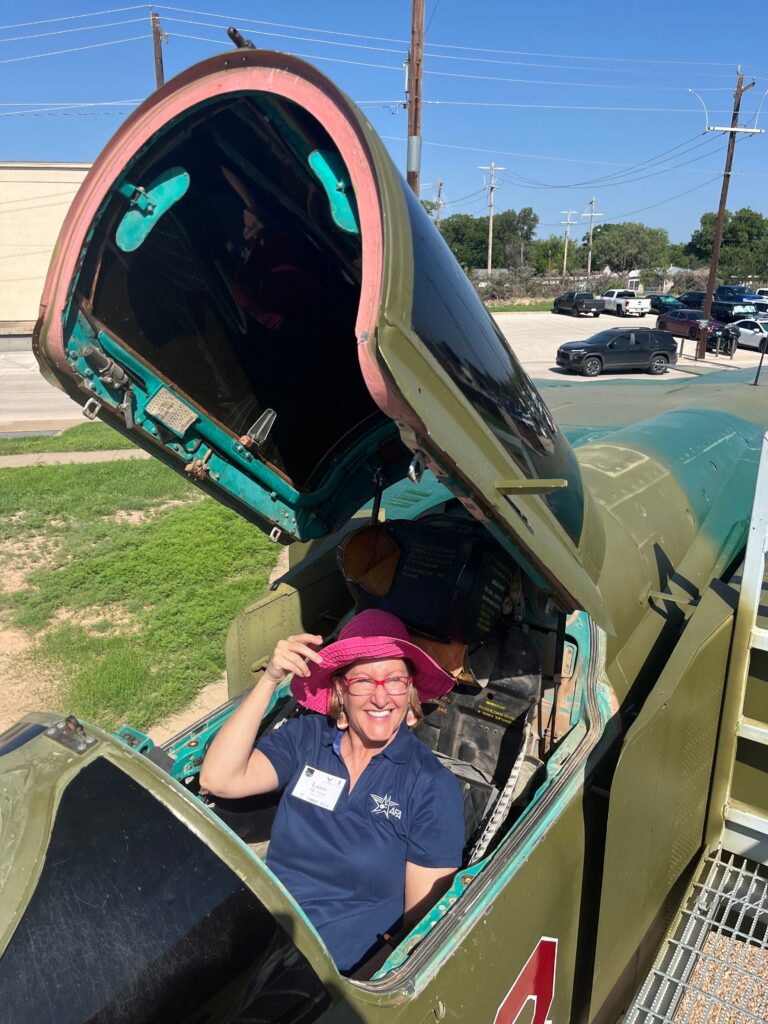
Among the most unforgettable moments of the tour was a visit to a static MiG-23 display, where we were allowed to climb into the cockpit of the former Soviet aircraft. For me, it was a rare and vivid reminder of the history, technology, and global context behind military training.
That experience was followed by a virtual reality demonstration that allowed me to explore Russian equipment and digitally revisit the same aircraft I had just seen in person. It was a creative, modern example of how the Air Force is adapting its instructional methods to engage today’s learners.
We also visited training spaces and saw how the Air Force is rethinking instruction itself—moving beyond outdated slide-deck presentations and toward more immersive, student-centered approaches.
The Human Side
Beyond the technology and training, the tour also revealed the deeply human side of Air Force life. Briefings from chaplains, legal professionals, and resilience personnel showed how the service supports Airmen through personal crises, family challenges, and mental health needs.
Those conversations underscored something easy to miss from the outside: the Air Force invests heavily not only in technical preparation, but also in the well-being of its people.
Educators Play an Important Role
For me, the Educators Tour brought it all together. It showed how the Air Force develops young people into skilled, confident professionals while opening doors to training opportunities and potential careers in intelligence, medicine, communications, logistics, and fire protection. It also reinforced the important role educators play in helping students discover opportunities they might not otherwise see. By the end of the Goodfellow tour, I left with more than notes, photos, and stories. I came away with a clearer understanding of how educators, parents, recruiters, and community leaders can work together to guide students toward meaningful training, jobs, and career futures.
I saw the AFA mission at work—to promote dominant U.S. Air & Space Forces as the foundation of a strong National Defense. I saw it in the Educate pillar of that mission, too: AFA educates the public on the critical need for unrivaled aerospace power and promotes aerospace and STEM education for a technically superior and professional workforce to ensure national security. Both were visible throughout the tour at Goodfellow. AFA’s efforts to encourage and support STEM and the next generation of Air Force and Space Force leaders through youth competitions and camps, national and local awards, educator grants, scholarships, professional development opportunities, and programs have a direct impact nationwide.
This educator tour, sponsored by the Air Force Recruiting Service, showed me how critical educators are in teaching, challenging, encouraging, and ensuring that students have an awareness of the many opportunities available in our communities and across the nation. It was evident to me that the Air Force and Space Force offer career opportunities young people should know about and pursue. Educators are well-positioned to connect STEM education with both commercial and military opportunities.
Connecting students to the knowledge, skills, and career pathways that serve both personal growth and national service is exactly what educators are working toward.