Schiess, Bentivegna Impart Key Leadership Principles to Cadets
April 8, 2026 | By Patrick Fish
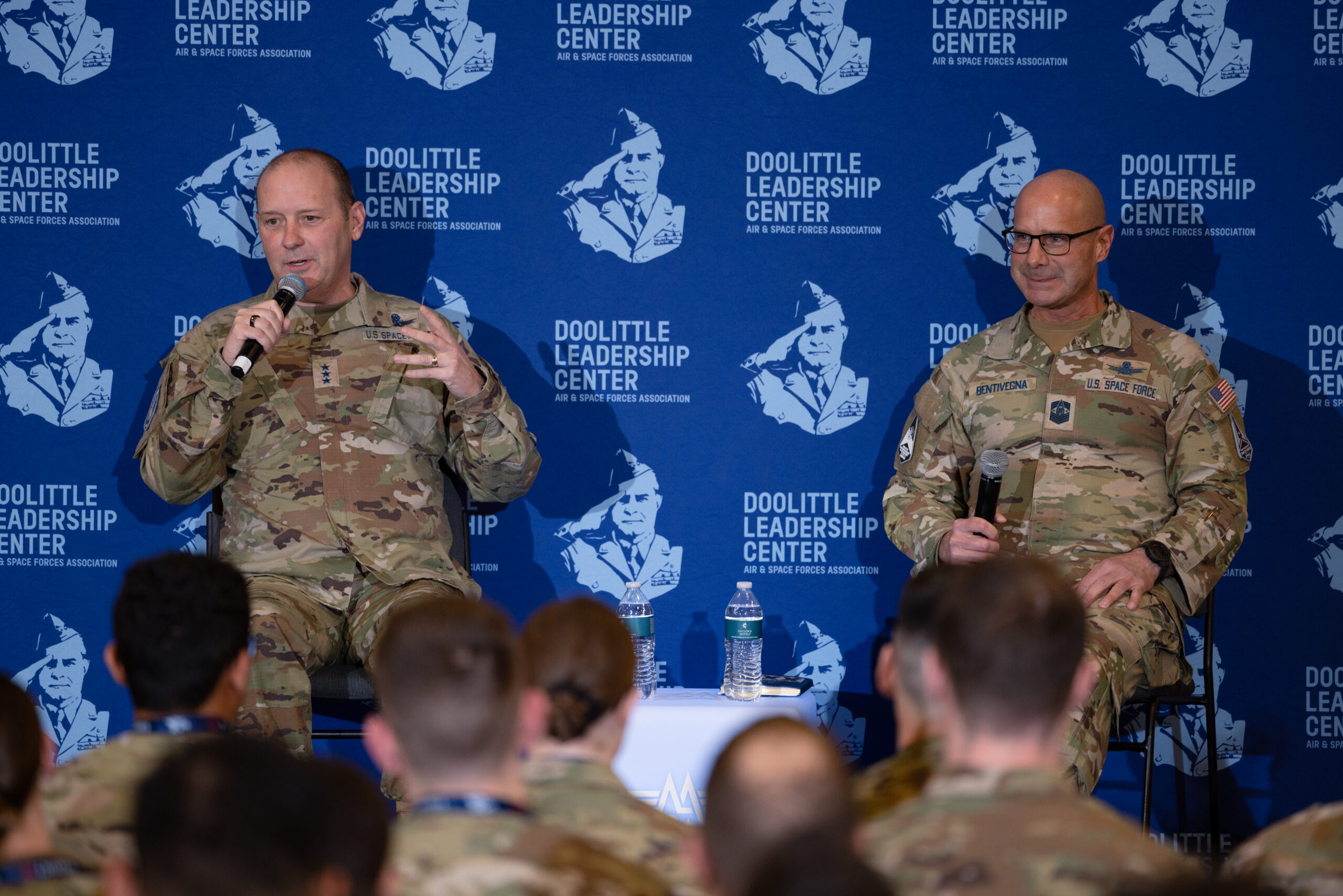
Space Force and Air Force cadets had a unique opportunity to engage with senior Space Force leaders and gain insight into effective leadership during the Air & Space Forces Association’s (AFA) 2026 Warfare Symposium. Cadets heard from Lt. Gen. Douglas A. Schiess, Deputy Chief of Space Operations for Operations, and Chief Master Sergeant of the Space Force John F. Bentivegna, the service’s most senior enlisted Guardian and senior enlisted advisor to the Chief of Space Operations and the Secretary of the Air Force.
More than 100 cadets from Air Force ROTC detachments, Arnold Air Society/Silver Wings squadrons, and the Civil Air Patrol attended the hour-long Q&A, organized by AFA’s Doolittle Leadership Center (DLC). DLC’s “Senior Mentorship for Junior Leaders” series connects high school and college-age students with high-ranking leaders across the Air Force and Space Force.
Schiess opened the discussion by emphasizing that integrity is a daily, irreversible choice rooted in early habits, while Bentivegna reminded cadets that leadership authority is earned through character, repetition, and responsibility long before rank is bestowed.
Despite reaching one of the highest ranks in the U.S. Space Force, Schiess emphasized that his career began humbly. “Thirty-eight years ago, I was one of you—a cadet who didn’t know much about the military,” he told the audience. Bentivegna followed by reinforcing the importance of leading by example and respecting those you serve. “The responsibility and the authority that is given to you based on your rank is not as powerful as the one that you earn,” Bentivegna told the cadets.
Throughout the discussion, Bentivegna and Schiess answered cadets’ questions about their leadership experiences and personal leadership styles, offering insight to future officers preparing to step into their first positions of authority within the Air Force and Space Force.
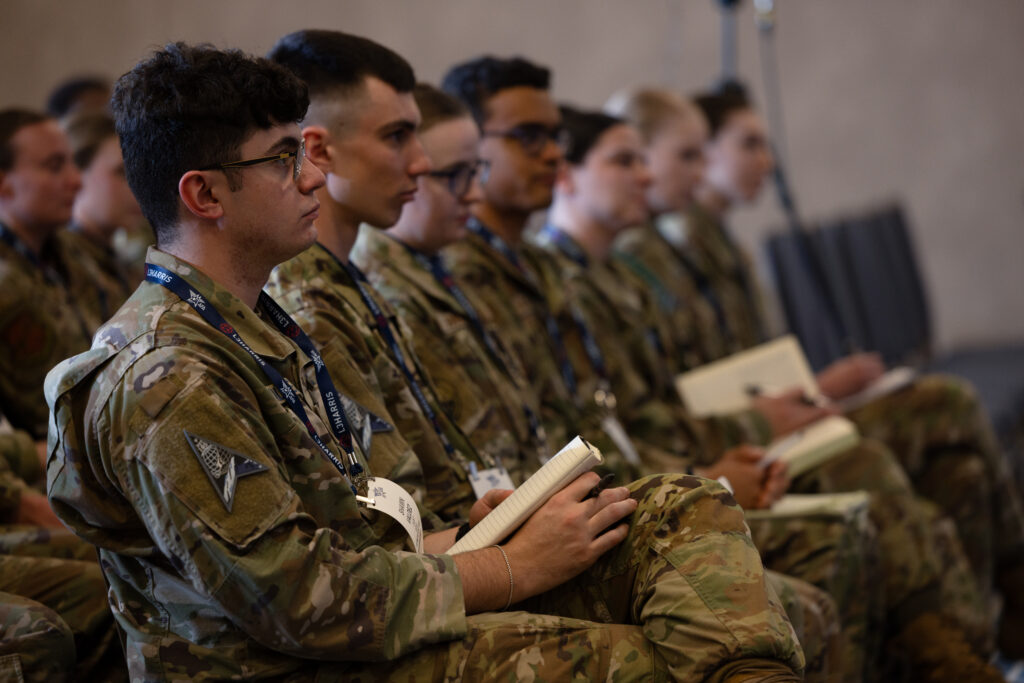
During the panel, one cadet asked the senior Guardians how best to “control your controllables” without becoming distracted by things that cannot be changed. Schiess shared a lesson from his first assignment as a junior officer at an ICBM launch facility, where a superior reprimanded him for failing to address a missed salute. The moment, he explained, underscored the responsibility leaders have to set standards and uphold expectations—even in small, uncomfortable situations. Schiess emphasized that setting a good example and clearly defining what right looks like are essential to controlling the controllables, and that meaningful change begins with personal ownership.
“When you get to your first assignment, whatever your duty is, the thing that you control is being the best at what you’re supposed to do,” Schiess said. “Learn your duties and be the best at that. That’s what you can control.”
Bentivegna reinforced the importance of accountability and earned credibility. “Take ownership of the decisions that you make as leaders,” Bentivegna told the cadets. “Don’t pass the buck onto somebody else, because you have immense influence and opportunity right in front of you. Don’t let it pass you by, because it gives you a reputation, it gives you credibility, and it gives you practice.”
Another cadet asked Bentivegna how best to manage large organizational changes and support a team through them. Bentivegna noted that change is a constant, pointing out that the Space Force is only six years old and continues to evolve rapidly. He emphasized that gaining buy-in from the people leaders serve is essential to navigating change effectively.
Bentivegna added that leaders must first understand how change affects them personally and then be able to “translate that to the men and women they’re leading,” so teams can recognize the value behind organizational direction and evolving processes and procedures.
Events organized by the Doolittle Leadership Center, such as the “Senior Mentorship for Junior Leaders” series, demonstrate how meaningful dialogue between leaders at different levels helps prepare the nation’s next generation of military leaders to turn challenges into opportunities for success.
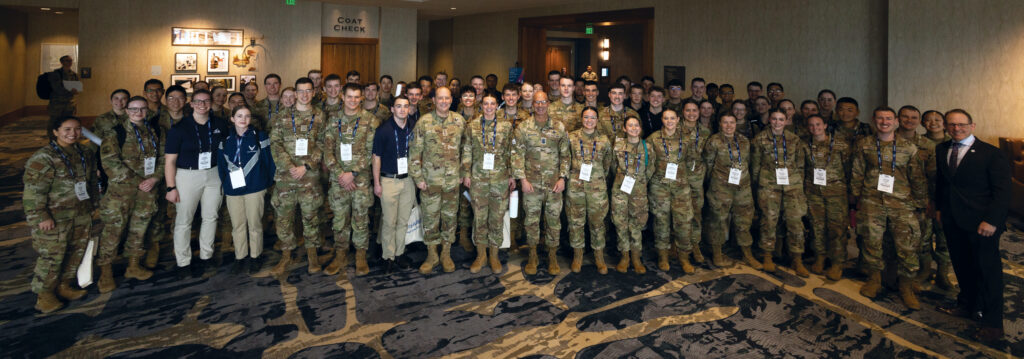
“Lt. Gen. Schiess and CMSSF Bentivegna demonstrate that strong, yet personable leadership is key to effectiveness,” said Dr. Patrick Donley, a retired U.S. Air Force colonel and director of AFA’s Doolittle Leadership Center. “By sharing their insights with the next generation, our military’s future leaders will be better prepared to meet the challenges ahead. We are thankful for the time and advice they gave to our upcoming junior leaders.”
The Doolittle Leadership Center also extends its mission through its podcast, Building Better Leaders, which features candid conversations with influential leaders about their stories and how they have learned to lead. Hosted by Donley, the series takes place in locations around the globe during the DLC’s on‑location leader development workshops. Listen to new episodes of Building Better Leaders here.
For more information about the Doolittle Leadership Center, visit the DLC webpage or contact dlc@afa.org.
About the Doolittle Leadership Center
AFA’s Doolittle Leadership Center’s mission is “Building Better Leaders.” In the spirit of AFA’s founding President Gen. Jimmy Doolittle, the DLC delivers leadership-training courses, workshops, and resources to Air Force, Space Force, and defense industry leaders around the world. Using a “Lead, Develop, Care” model, the DLC equips cadets, enlisted leaders, officers, and industry professionals with a leadership framework to improve organizational, operational, and individual success. The DLC also organizes engagement series aimed at connecting senior military leaders to the next generation of leaders.
About AFA
The Air & Space Forces Association is an independent, non-profit 501(c)3 association dedicated to advocating for the U.S. Air Force, the U.S. Space Force, Airmen, Guardians, and their Families. Founded in 1946, AFA is the single largest entity of its kind focused on air and space power. With more than 350,000 members and 200 chapters spread around the world, our mission is to promote dominant U.S. Air Force and Space Force as the foundation of a strong National Defense; to honor and support Airmen, Guardians, and their Families; and to remember and respect the enduring heritage of the Air and Space Forces.