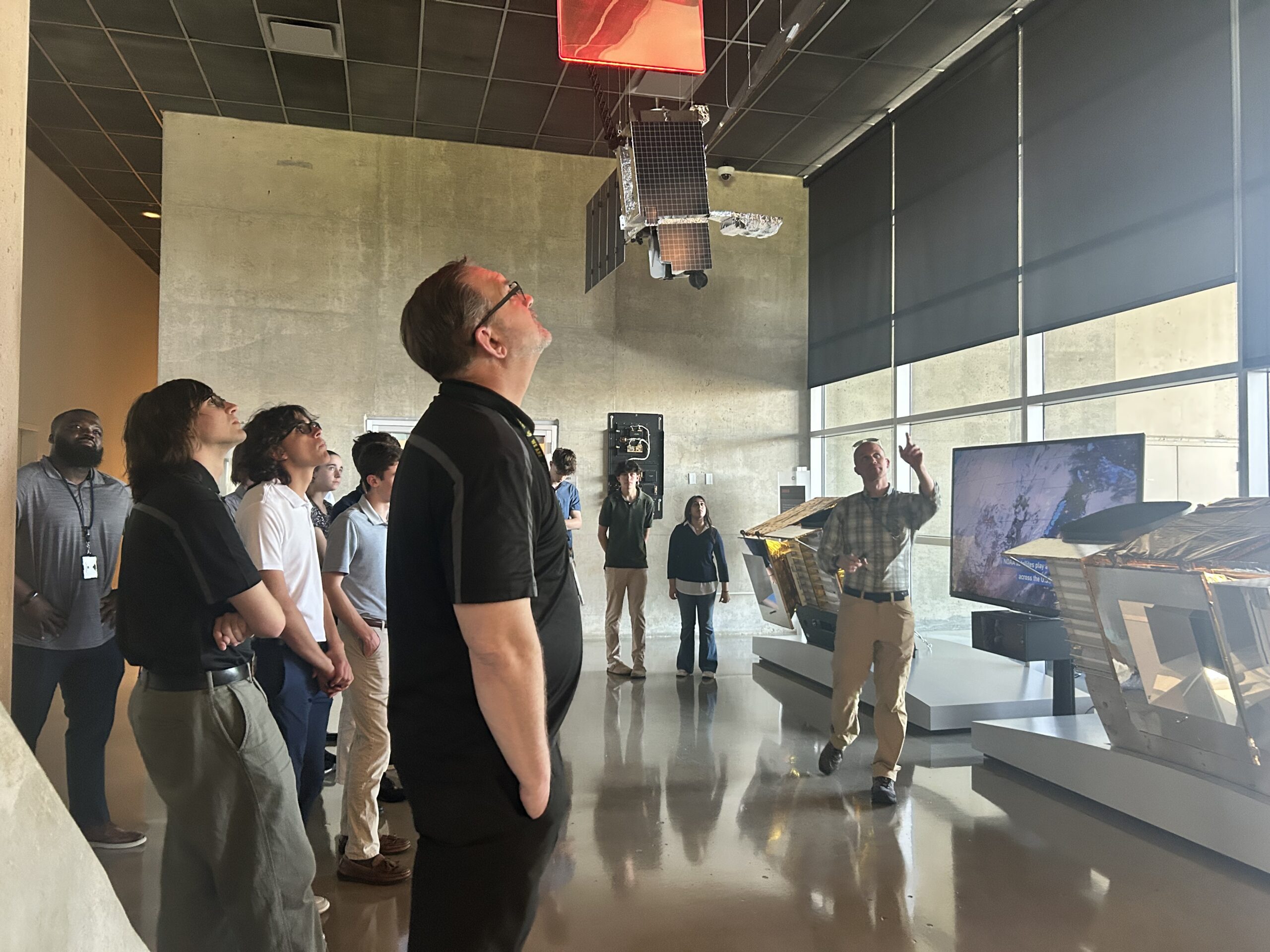
Maryland StellarXplorers Team Gets Inside Look at Real Space Force Mission
July 24, 2026 | By Patrick Fish
A competition scenario about protecting astronauts from hazardous space weather, assigned to a team of Maryland high school students, became the chance of a lifetime this spring, thanks to a Space Force colonel with a real connection to their mission.
The “Buzz Back” team from Great Mills High School—located in southern Maryland—placed second in the 2026 StellarXplorers National Space Design Competition held in Denver. A judge for the competition, Col. Barry Croker, commander of the Space Force’s Mission Delta 2, recognized the mission’s connection to a real facility: a satellite downlink jointly operated by the Delta’s 19th Space Defense Squadron (19 SDS) and the National Oceanic and Atmospheric Administration (NOAA), about an hour from their school. Weeks later, he arranged for the students to see the facility in person.
StellarXplorers is a national STEM program created by the Air & Space Forces Association (AFA) after a September 2014 request from the Secretary of the Air Force. It challenges high school and middle school teams to design solutions to realistic space scenarios aimed at inspiring interest in aerospace and other STEM disciplines the program describes as critical. Teams, which range from two to six students, compete in three online qualifying rounds and a semifinal round, with the top 10 advancing to an in-person National Finals Competition.
Each round builds on the last and challenges students with different aspects of space design and mission planning. Students start with orbit selection, then move to satellite design—balancing payload weight, capability, and cost—followed by launch operations, where teams choose a rocket based on cost and performance. The semifinal round combines two of these disciplines, while the National Finals bring all three together in one final mission.
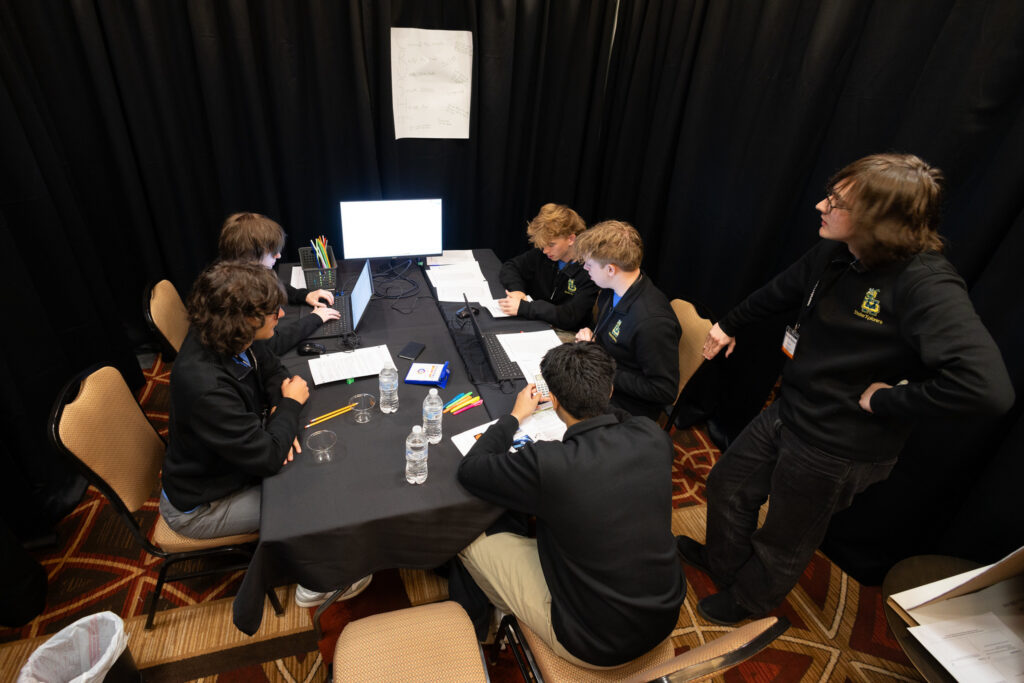
The students of the Great Mills Buzz Back team have competed together since their sophomore year, when they first qualified for the StellarXplorers finals and ultimately placed fourth. Buzz Back coach Allen Skinner, a physics teacher at Great Mills High School, noted the team’s debut was unusually strong. In their final year, the students returned to the finals with hopes of claiming the national title.
During the final competition round, the mission called for a relay satellite in deep space, oriented toward the sun, to detect hazardous space weather. The Buzz Back students had to choose an orbital regime for the satellite, select the sensors and instruments needed to maximize its effectiveness, and determine how to communicate that data back to earth. In addition, they had to select a rocket to place the relay satellite into their selected orbit, balancing mass and cost elements.
The satellite’s data was then relayed to a ground station, which facilitated the analysis and communication of that information to protect simulated astronauts stationed on the lunar surface.
Croker, who judged the team’s presentation, praised the fidelity of the students’ reasoning to the work real space operators do every day. “It was very realistic, down to the calculations, trading off satellite performance against the cost of launch and component performance,” he said.
Another aspect of the team’s presentation stood out to Croker, who also judged the leadership and process portions of the competition. In their closing remarks, a few Buzz Back members spoke directly about their school’s reputation—one shaped, they said, by negative news coverage of past incidents at the school—and told the judges they wanted Great Mills to be known instead for the achievement of its students.
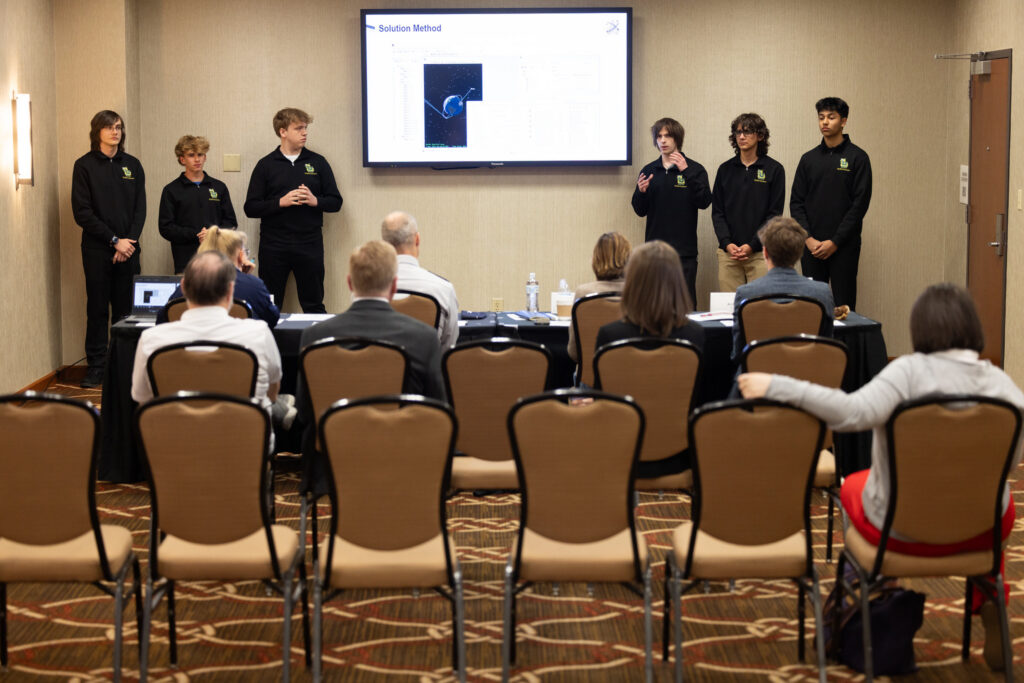
After the competition concluded, and the Buzz Back team returned to Great Mills with a second-place award, the moment stuck with Croker—especially the unintentional overlap between the students’ mission and the real-life work he oversees at a facility in Suitland, Md. “This is interesting that I’m here and I’m doing this,” Croker recalled thinking. “Let’s see if we can try to get an opportunity for these kids … to bring them to the site at Suitland and just show them what it’s like in real life.”
In the weeks that followed, Croker connected his squadron commander with Skinner to arrange for the Great Mills team to visit the facility.
The site, known as the NOAA Satellite Operations Facility, is where NOAA manages and directs the operations of its fleet of environmental and weather-monitoring satellites, including receiving downlinks from them. NOAA staff work alongside Space Force personnel assigned to Mission Delta 2’s 19th Space Defense Squadron, Operating Location Alpha (OL-A), who partner with NOAA to operate the Space Force’s own space weather monitoring satellites and coordinate weather data for use by the military.
When the students arrived at the facility, Paige Dodson, a mission support specialist with 19 SDS OL-A, gave them an overview of its mission before staff from NOAA briefed the group on the agency’s side of the operation.
The students and staff engaged enthusiastically during the briefing, and as Skinner described it, the preparation and genuine interest the staff showed in explaining their day-to-day work made the students feel “really, really special.”
Once the briefing concluded, staff raised a screen on one side of the conference room to reveal the facility’s operations floor below. The Great Mills students, who included the school’s other teams besides just the Buzz Back students, erupted at the sight. “It was awesome—all these gasps right from the kids,” Skinner said.
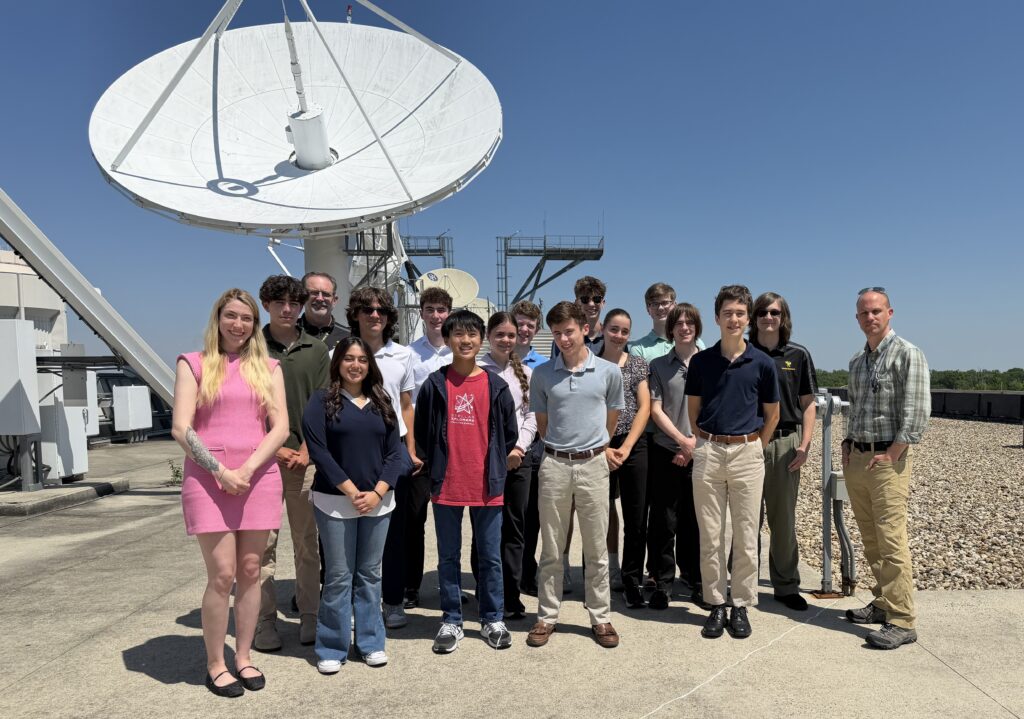
While Space Force and NOAA staff couldn’t tour the students around the operations floor they’d seen from the conference room, they took the group up to the roof for a view of the facility. There, NOAA and the Space Force house a series of satellite dishes, including four 9.1-meter antennas the Operations Facility uses to communicate with NOAA’s geostationary weather satellites—and, from that height, a view of the Washington Monument in the distance.
The group posed for a photo before heading down, joining staff for cake to celebrate what OL-A, the Space Force detachment at NSOF, called its “4th Solar Return”—its term for the unit’s anniversary, marking four years since the detachment transitioned from an all-military team to its current civilian-led structure.
Dodson said the students’ knowledge of the subject matter stood out to her. “They had so much knowledge,” she said. “I’m not a subject matter expert, but I think they taught me more than I could teach them.”
As the Great Mills teams began to depart, the facility staff floated an idea to Skinner—turning the visit into an annual tradition, which he called an “awesome” opportunity for the StellarXplorers students he leads each year. Dodson said OL-A would welcome the chance to host Great Mills, or any other StellarXplorers team, again in the future.
While for Croker, the connection between the Great Mills team’s mission and his own unit’s work was serendipitous, he hopes it could be the start of a larger collaboration between StellarXplorers and the Space Force.
“If I were king for a day, I’d love to see this become more of a normal thing,” Croker said. “Say next year’s scenario is based on GPS—the commander over GPS could be intimately involved and have that same opportunity to give students exposure to what they do day to day.”
Croker added that he plans to introduce StellarXplorers to his peer commanders, pointing to its impact on students as a reason others should get involved.
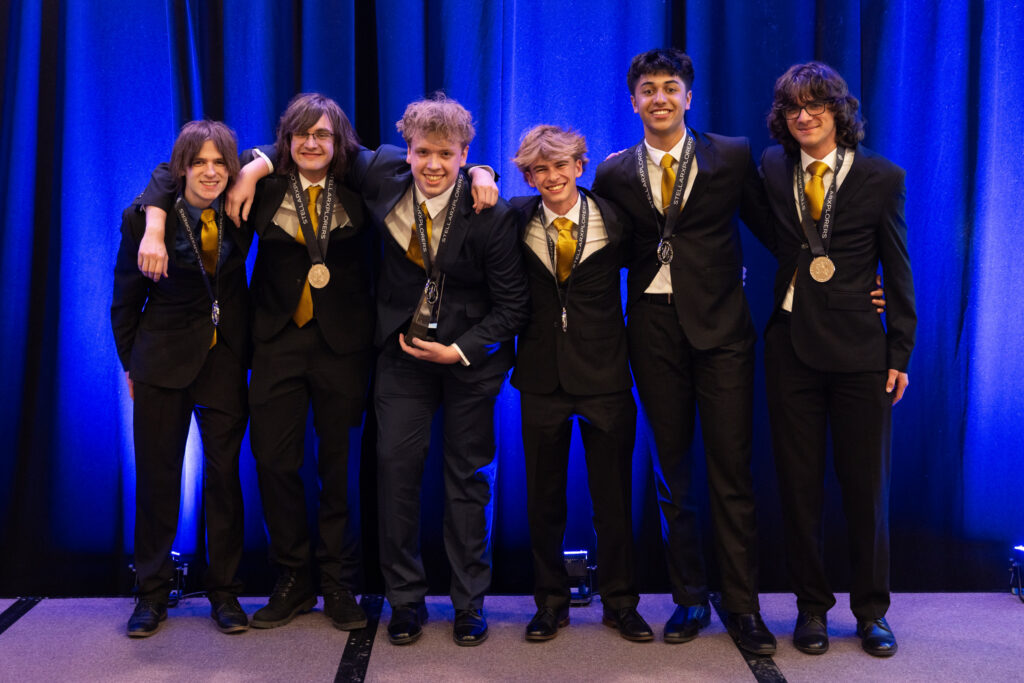
The impact StellarXplorers has on the students who take part in its program is readily apparent in the Buzz Back team. Each of the team’s six seniors is pursuing a different STEM path after graduation, ranging from nuclear and computer engineering, to medicine, and, in the case of team member Aiden Brickner, a career as an Air Force pilot.
“StellarXplorers has taught me how to rebound from failure and turn setbacks into motivation,” Brickner said. “That resilience and mindset have impacted me far beyond the competition and shaped how I approach challenges in academics and engineering.”
Skinner, who has led StellarXplorers teams at Great Mills for nearly a decade, said that kind of growth is exactly what the program is designed to produce: “StellarXplorers provides authentic, challenging problem solving in space science. I am always impressed with the quality and creativity of the problems provided and appreciate the connection to space science that I cannot find anywhere else.”