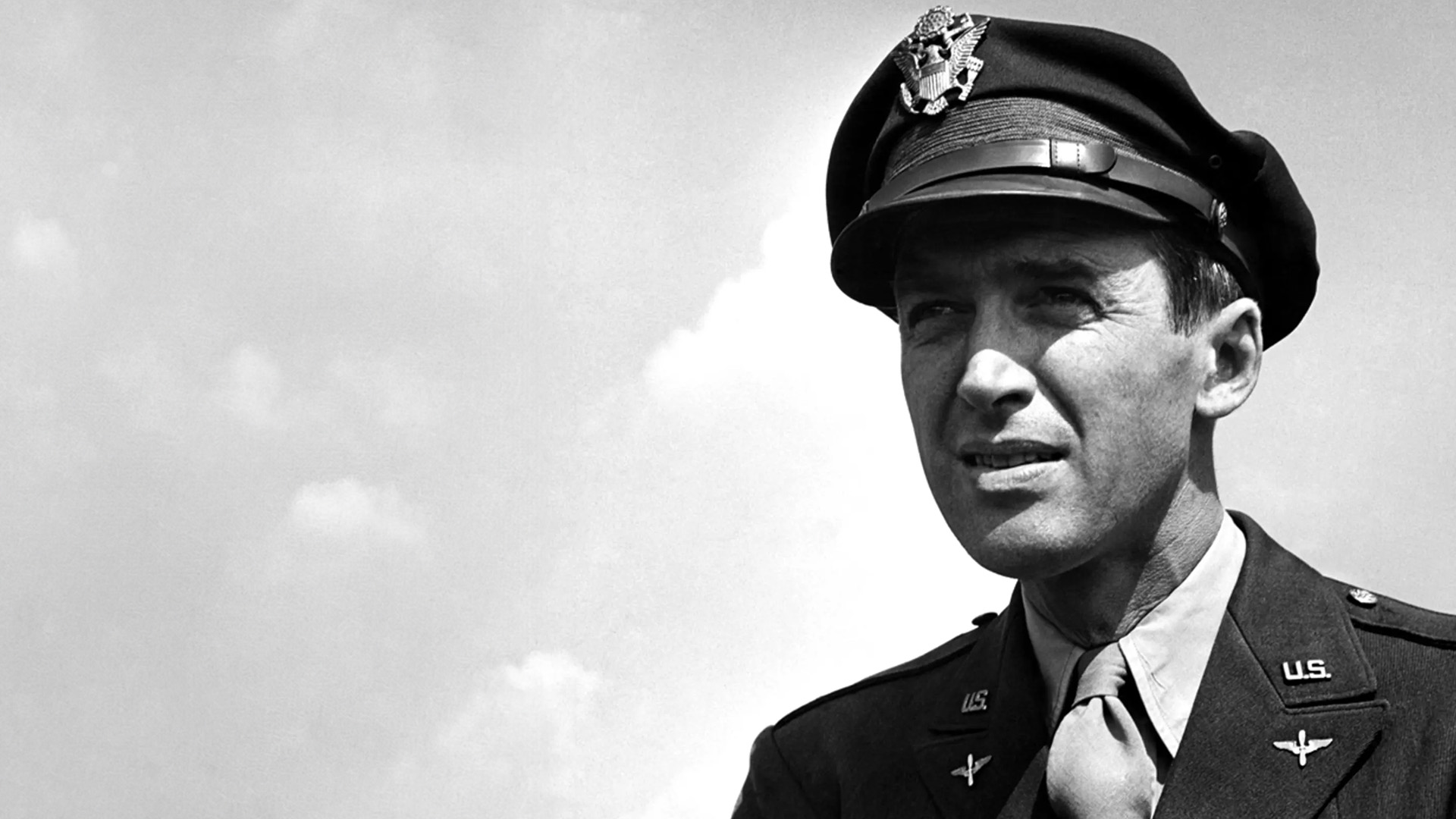
Skyward Star: Jimmy Stewart the Airman, War Hero, and Lifetime Airpower Advocate
November 10, 2026 | By Patrick Fish
To his fellow service members, “he was first an Airman, then a star of the movies,” The Ohio State Journal wrote in 1947 of James Stewart. Known to many simply as “Jimmy,” he was one of the most famous actors of his time and is considered one of the all-time greats, yet he often defined his life by a different calling—not the silver screen, but the silver wings he wore on his uniform.
As the new “JIMMY” movie hits theaters around the nation this November, more Americans are learning how airpower and military service impacted this beloved actor’s life and career. But for lifelong Airmen and many members of AFA (which was co-founded by none other than Jimmy Stewart himself), his character, humility, and lifelong service remain as iconic as his Hollywood fame, if not more so.
“I’m daffy about planes and love being around them.”
Jimmy Stewart, Air Force Magazine, 1955
Ever since he was a boy in small-town Indiana, Pennsylvania, Stewart loved aircraft. Charles Lindbergh was his hero. Nearly every spare moment was spent gluing model airplanes. He spent everything he earned on his newspaper route just for a ride on a barnstormer passing through town.
Stewart dreamed of attending the U.S. Naval Academy and becoming an aviator, but his father steered him toward an architecture degree at Princeton. Undeterred, he made an airport terminal design the subject of his senior thesis. Even as his film career took off in 1935, Stewart made time to earn his private pilot’s license. Seeing the need for trained pilots, he also joined other celebrities in investing in Thunderbird Field, an Arizona pilot-training school that went on to train Army pilots.
From Silver Screen to Silver Wings
By 1940, war was raging in Europe, and U.S. involvement (and draft) loomed. Not long after he wrapped filming on “The Philadelphia Story,” Jimmy’s draft number, 310, was called in the first peacetime lottery. With his celebrity status, the Hollywood leading man could easily have sought a deferment, as his studio bosses expected. But Jimmy was a patriot and a pilot—the draft was his chance to serve his country and fly for it.
He reported to the draft board like any other citizen, but at 6-foot-3 and 138 pounds he was rejected for being underweight. This only strengthened his resolve: the lanky actor ate spaghetti twice a day and ice cream every night to make weight. For all that, he still came up just a couple of ounces short, but after pleading his case he practically forced his way into service.
In February 1941, Jimmy won Best Actor for “The Philadelphia Story” at the 13th Academy Awards. Less than a month later, he traded Hollywood’s red carpet for the barracks of Army boot camp. He was inducted as a private on March 22.
Now that he was in uniform, there was yet another uphill battle—to fly. At the age of 32, he was five years beyond the Army’s cutoff for aviation cadet training. He made the case that his more than 300 civilian flight hours qualified him to win his wings; Army leadership eventually agreed but remained apprehensive about sending one of America’s most famous men to war. As a compromise, they had him star in “Winning Your Wings,” one of the Army Air Forces’ earliest recruiting films, and kept him stateside as an instructor pilot for much of 1942 and 1943. But, as he’d already proven, Jimmy was not cowardly about fighting for what he wanted: no special treatment, and a place in the front-line flying unit.
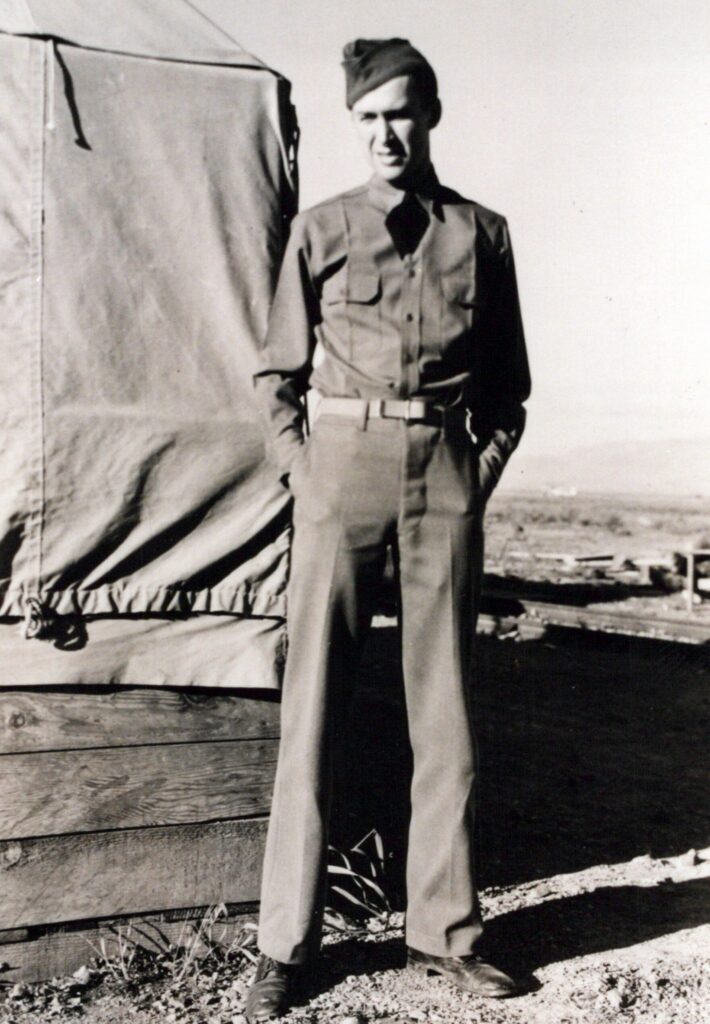
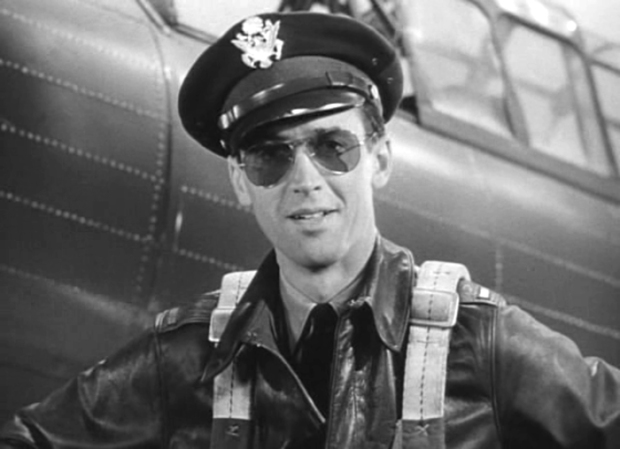
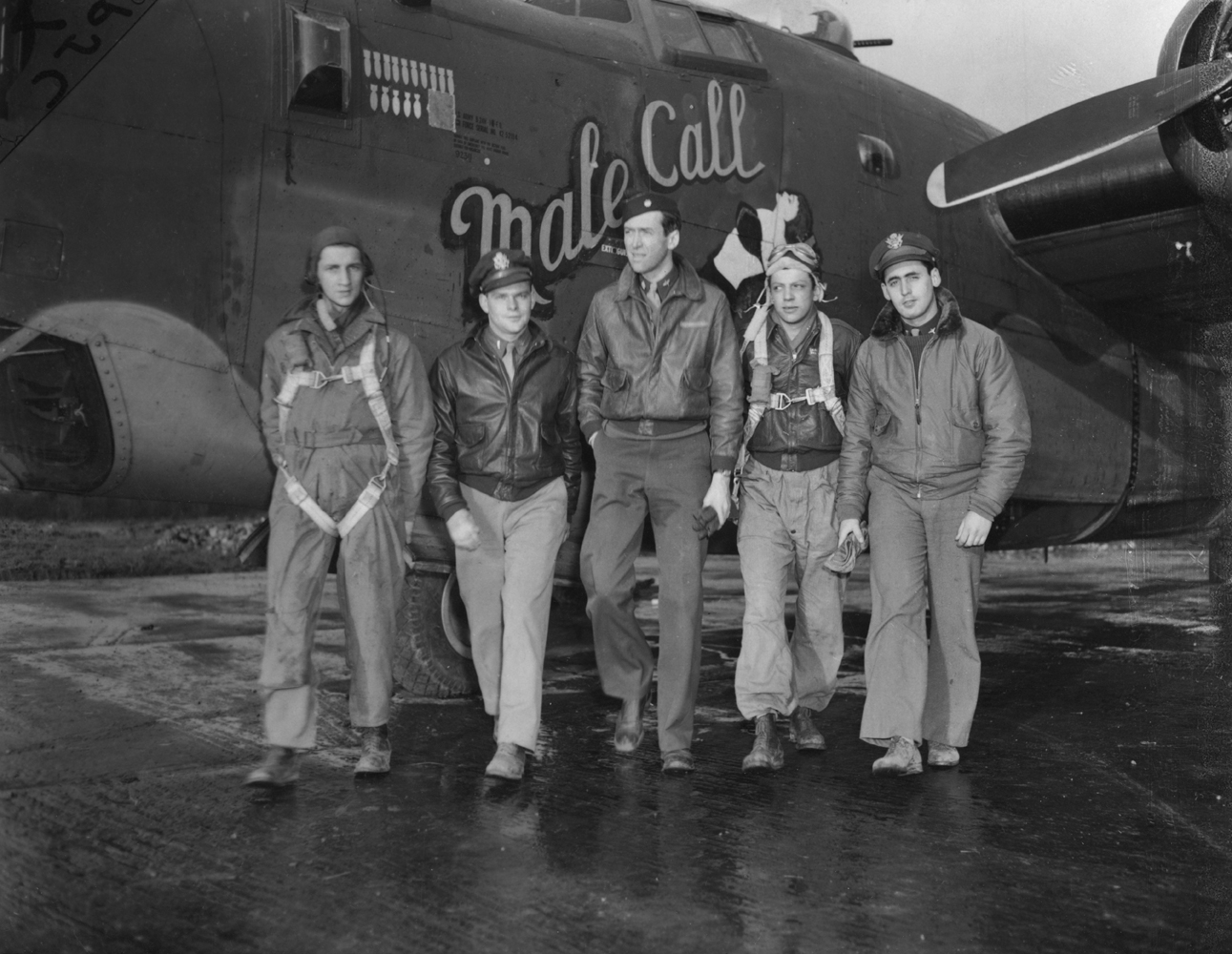
His persistence paid off. In 1943, the Oscar winner was deployed to Europe with the 445th Bomb Group to fly bombing raids against German targets. Bomber crews had one of the deadliest jobs of the war. He flew his first combat mission as a copilot in a raid on Kiel, Germany. His men at first assumed he was there only for publicity, but Jimmy’s attitude and aviation prowess quickly earned him their respect as a leader. He often brought his aircraft home riddled with flak, and he grappled with the loss of men under his command. In one instance, his unit lost 13 aircraft and 130 men on a single mission. Though haunted by self-imposed guilt, he kept flying and rising through the ranks; one commander called him “100 percent as a pilot.”
Despite his accomplishments—both in reputation and in combat—Jimmy remained extraordinarily humble. After moving to the 453rd Bomb Group as its operations officer, he worried that the press cared more about his celebrity than his service.
He banned journalists from his base, relenting only when they agreed to write a story about his Airmen, not him. “Dad was one of the most unpretentious people I’ve ever met,” his daughter Kelly Stewart-Harcourt said during an episode of AFA’s Building Better Leaders podcast. “Part of doing the right thing was being humble, being modest.”
By V-E Day, he had flown 20 combat missions, reached the rank of colonel, and earned the Distinguished Flying Cross with an oak leaf cluster. The war was over, and after roughly a year and a half in Europe, America’s star was heading home a drastically changed man.
He came home thinner and haggard. He struggled to eat and sleep. His parents were shaken by how much he had aged. When the press asked about his sudden amount of gray hair, he simply answered, “It got pretty rough overseas at times.”
Jimmy later said he thought about his military experience “almost every day” and called it “one of the great experiences” of his life, “greater than being in the movies.” His daughter reflected that the war “affected him more deeply and permanently than anything else in his life,” even though he never talked about the war at home. He kept his memories to himself, brooding over the war and the men he lost and likely suffering from what today would be diagnosed as PTSD.
But airpower had always been in his blood. It became his form of healing. For a time, he lodged with fellow actor and Navy veteran Henry Fonda, and the two built model aircraft while recovering.
A-List Airpower Advocate
Knowing equally the horrors of war and the importance of airpower firsthand, Jimmy went on to dedicate his life to advocating for his fellow Airmen and the Air Force. Even as he stayed quiet about his own internal war, he wanted to support the Airmen coming home and make sure American men would never again have to be sent into a war on that scale.
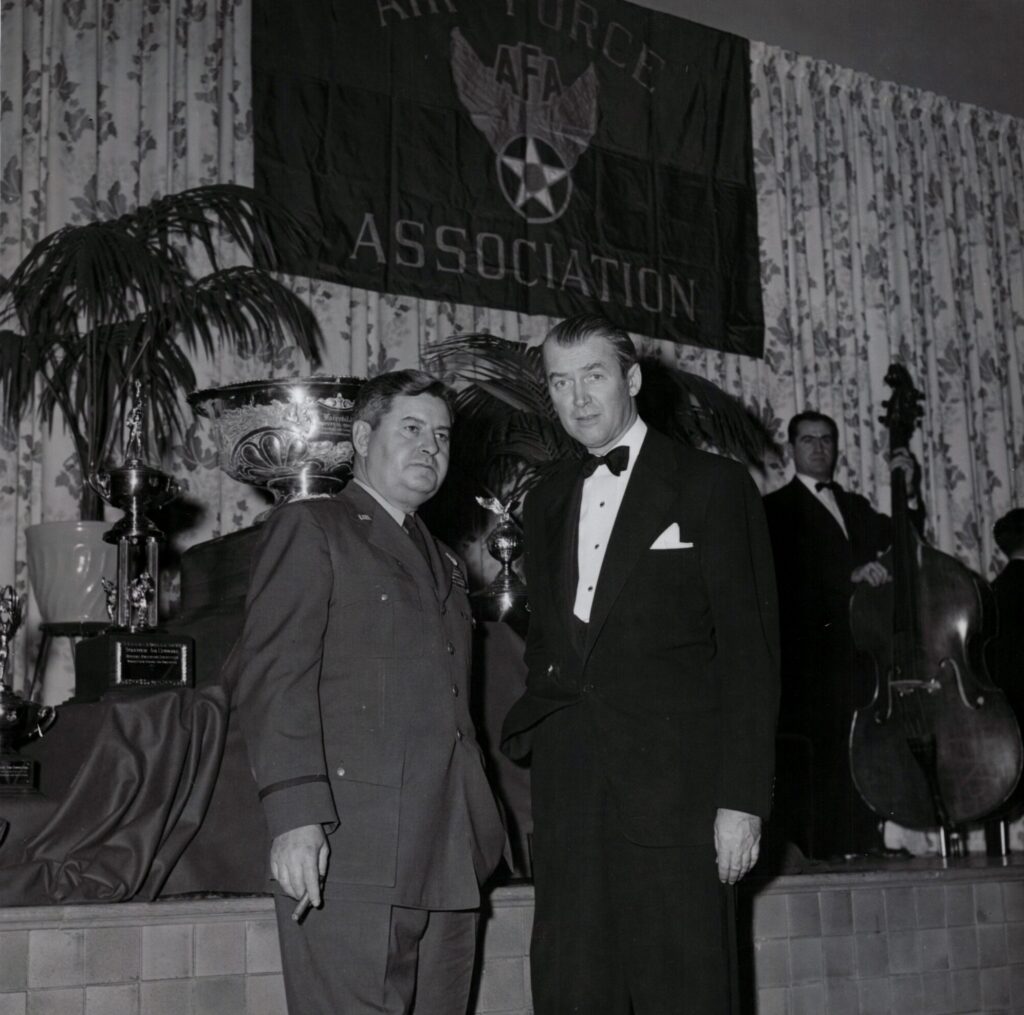
In 1945, he had his chance. General of the Army Henry “Hap” Arnold called for a civilian association that would unite returning Army Air Forces veterans and remind the public that airpower had helped win the peace and would be needed to keep it. Stewart and the legendary Lt. Gen. Jimmy Doolittle were among the 12 founders who answered that call, meeting in New York on Oct. 12, 1945, to form it. Rallying around the slogan “Let’s Keep the Gang Together,” they set out to make sure the Airmen who had won the war would still be heard. “They busted up all the airplanes but we wanted to keep ourselves together,” Stewart said in 1955.
By early 1946, the group had incorporated the Air Force Association (AFA) in Washington, D.C., with Stewart on its initial board of directors. They quickly launched a national campaign to recruit returning Airmen to the burgeoning association.
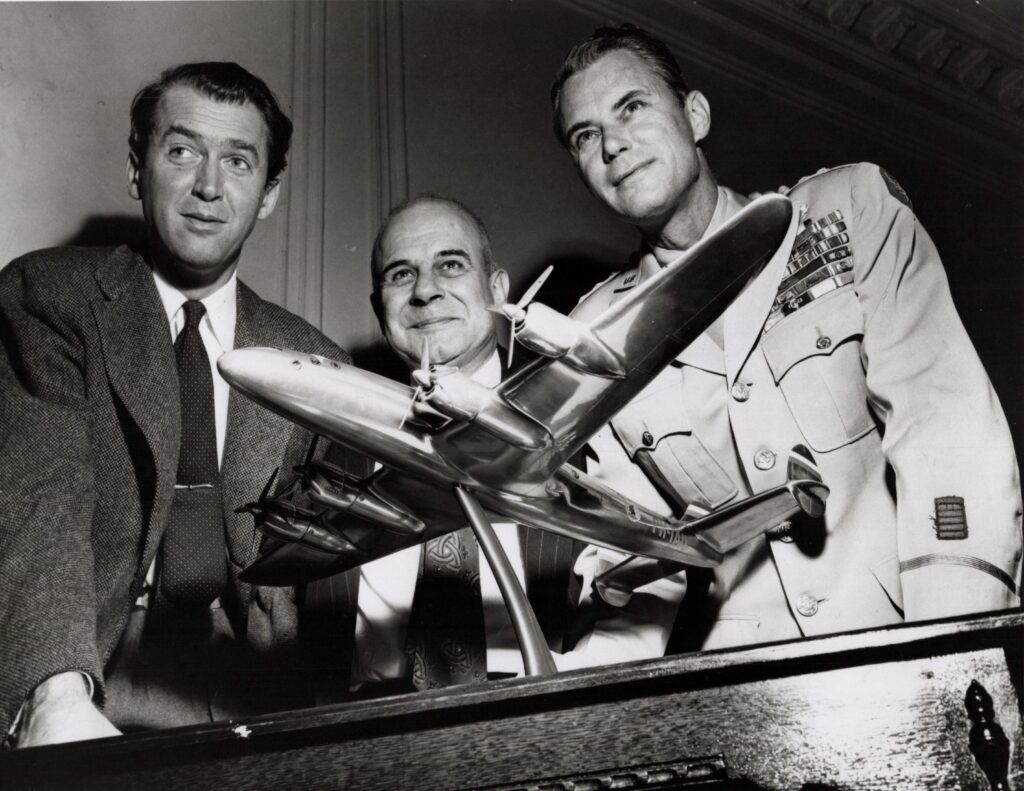
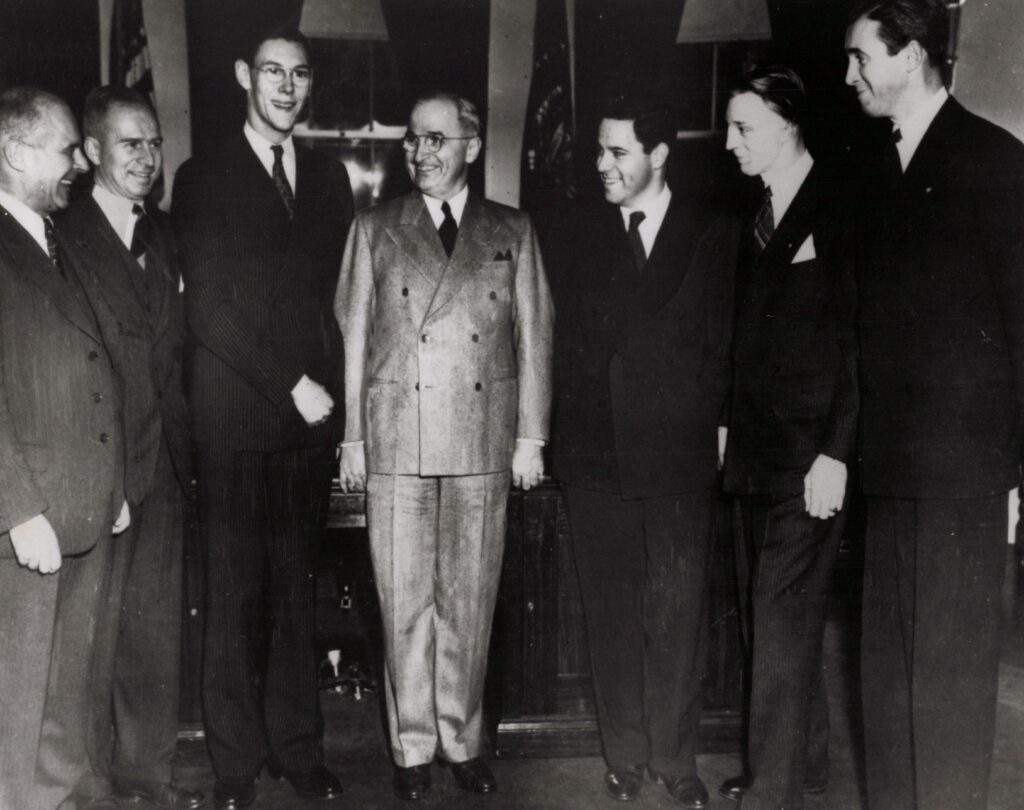
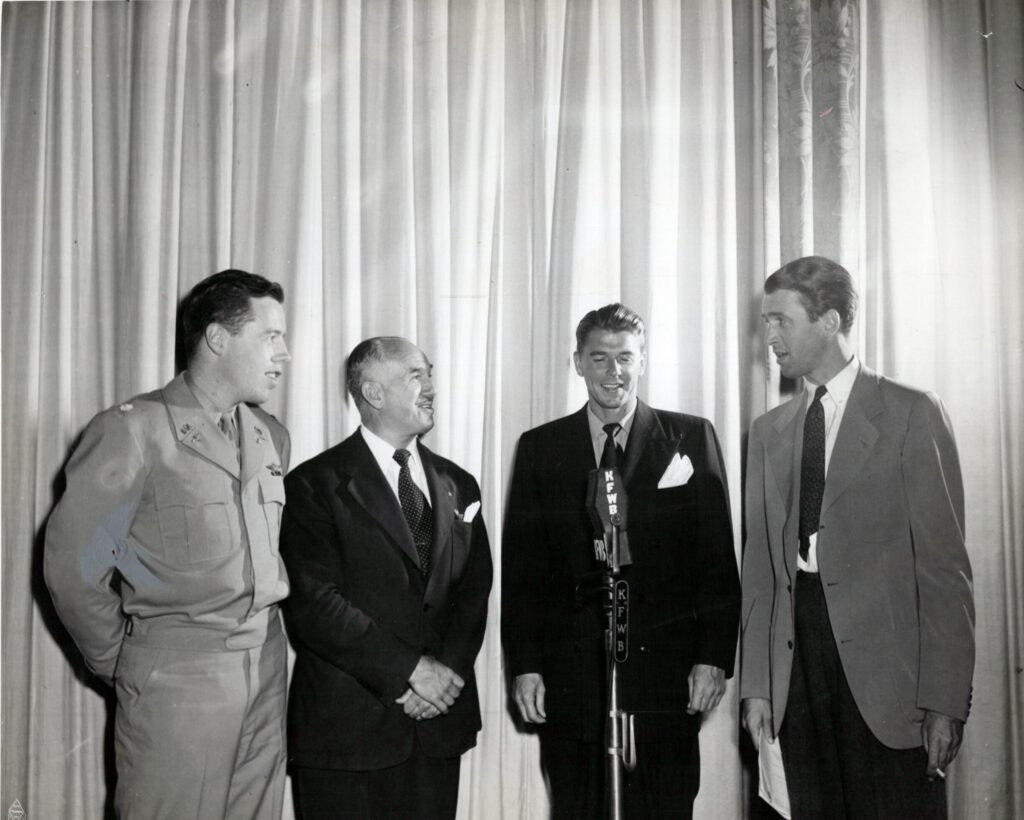
Mere days after wrapping filming on “It’s a Wonderful Life,” Jimmy took part in AFA’s first national project, a prime-time radio broadcast on Aug. 1, Air Force Day, that reached from the Atlantic to the Pacific. Stewart joined fellow Hollywood figures such as Ronald Reagan and studio chief Jack Warner on a day whose slogan was “Air Power Is Peace Power.” Together, they helped push AFA’s chief goal in its early years: an independent Air Force. Stewart later described AFA as “the kind of an outfit that can stand up on its hind legs and lay it on the line about airpower.”
In September 1947, the Hollywood star flew into Columbus—fresh off a movie shoot—for AFA’s first national convention. He was met by a crowd of both veteran and civilian admirers and was elected the association’s first vice president. Days later, thanks in no small part to the nationwide advocacy of AFA and Jimmy, the United States Air Force officially became the newest service branch. Jimmy’s AFA had achieved its first goal.
A year later, Madison Square Garden was packed beyond capacity for AFA’s “Operation Wing Ding,” where Jimmy shared the bill with stars such as Bob Hope. With VIPs like Gen. Dwight Eisenhower in attendance and the Rockettes onstage, Jimmy’s star power helped make AFA a household name. The Garden’s president called the event “the greatest show ever put on” there. For two decades afterward, he continued to lend his voice to the airpower cause, emceeing AFA events from the Hollywood Bowl to New Orleans to Dallas.
For years after the war, Stewart wanted to make a movie about the Air Force, but he “didn’t want to do a war film.” In 1955, he found his story in the Air Force’s Strategic Air Command and its personnel problems. As a Reserve colonel who had “kept pretty close to the Air Force and its problems,” he championed “Strategic Air Command,” in which he played a baseball star and World War II bomber pilot recalled to active duty. “I knew that manpower was proving to be one of airpower’s major headaches,” Jimmy wrote in 1955 in AFA’s Air Force Magazine. He saw “a unique opportunity to combine some needed public education with a lot of entertainment.”
An Airman for Life
The actor-airman never really left the Air Force. As a Reserve officer, he kept lending his talent to the airpower cause. He played his childhood hero, Charles Lindbergh, in 1957’s “The Spirit of St. Louis,” narrated a 1958 film on the Civil Air Patrol’s International Air Cadet Exchange, and in 1961 presented an Air Force film on the nation’s early-warning and command systems “as seen through the eyes of a reserve officer.”
In February 1966, at 57 and a brigadier general, he flew as an observer on a nearly 13-hour B-52 bombing mission over Vietnam. He asked that no publicity be released because he wanted it treated not as a stunt but as part of his job as a Reserve officer. Two years later, at the mandatory retirement age of 60, he retired after 27 years of service.
His retirement did not stop him from talking about airpower, however. Though he rarely discussed his World War II service, he appeared in a 1974 documentary about the war, asking to be identified only as a squadron commander. At a 1988 AFA Aerospace Education Foundation event, he told the audience that his military service made him a “better citizen” and that he was “grateful to the United States Air Force.”
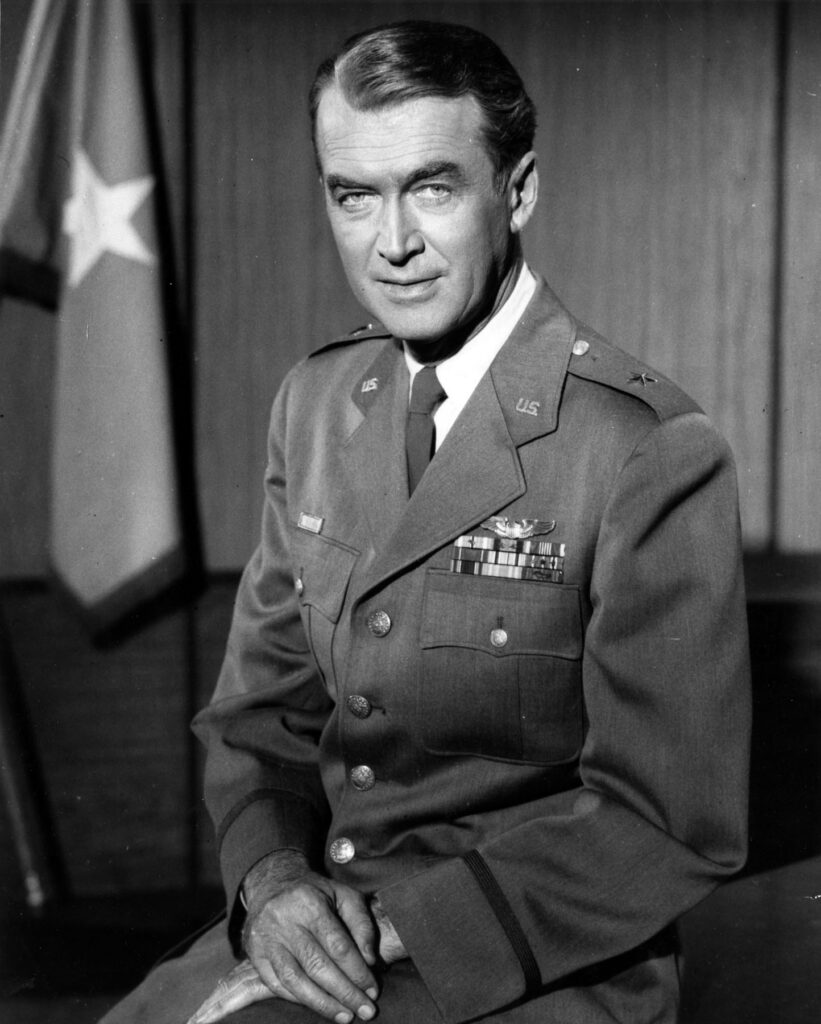
After Stewart’s death in 1997, AFA’s obituary described him as “instrumental in attracting numerous other celebrities to the cause of AFA and airpower.” In 2009, the former bomber pilot was inducted into the National Aviation Hall of Fame, and the Associated Press wrote that he “remained an American airpower advocate until his death.”
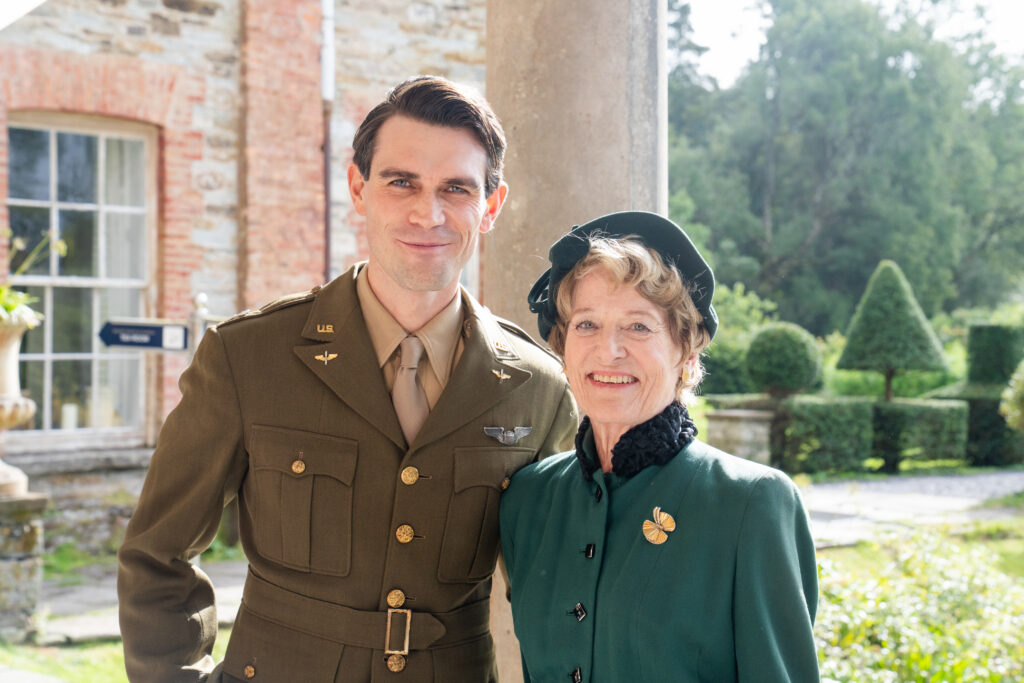
“JIMMY,” which opened in theaters Nov. 6, tells the story of Stewart’s drive to serve, his wartime service, and the war’s lasting mark on him. Ahead of its release, the film’s director and Jimmy’s daughter appeared at AFA’s Air, Space & Cyber Conference—the modern iteration of the convention Jimmy Stewart helped start nearly 80 years ago. “He not only played heroes on the screen, but he lived a hero in real life,” director Aaron Burns told hundreds of Airmen and Guardians. And while Jimmy would never call himself a hero, he would agree with this: that the silver screen made him famous, but his silver wings made him Jimmy Stewart.